



What's Happening?
A recent poll by the Public Policy Institute of California (PPIC) reveals that 66% of Californians oppose Governor Gavin Newsom's mandate to phase out gasoline-powered vehicles by 2035. This directive, issued in 2020, aims to require all new cars and light
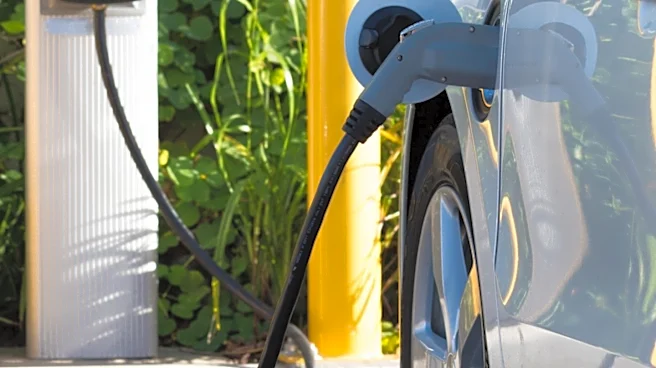
trucks sold in the state to be zero-emission. Despite the state's significant investment in electric vehicle infrastructure, including over 200,000 public charging stations, many residents express concerns about affordability and the adequacy of charging facilities. The opposition is particularly strong among Republicans and independents, with 91% and 69% respectively against the mandate. The poll also highlights a regional divide, with higher opposition in inland areas like the Central Valley. Meanwhile, the demand for zero-emission vehicles has increased, partly due to rising gasoline prices linked to geopolitical tensions.
Why It's Important?
The opposition to Governor Newsom's zero-emission vehicle mandate underscores the tension between environmental goals and economic realities. While California leads the nation in electric vehicle sales, the high cost of these vehicles remains a barrier for many residents. The state's ambitious environmental policies, such as the mandate for renewable energy by 2045, face similar challenges. The poll indicates a disconnect between Californians' support for environmental initiatives in principle and their willingness to bear the associated costs. This situation highlights the broader challenge of balancing environmental sustainability with economic affordability, a critical issue as states and nations worldwide grapple with climate change.
What's Next?
In response to the economic concerns, Governor Newsom's administration has allocated $135 million in incentives for electric vehicle purchases, offering immediate discounts to buyers. This initiative aims to make electric vehicles more accessible and encourage their adoption. As the state continues to expand its charging infrastructure, the effectiveness of these measures in swaying public opinion remains to be seen. The ongoing geopolitical situation, particularly the conflict with Iran, may further influence gasoline prices and, consequently, the demand for electric vehicles. Stakeholders, including policymakers and environmental groups, will likely continue to debate the best strategies to achieve California's environmental goals while addressing economic concerns.