







What's Happening?
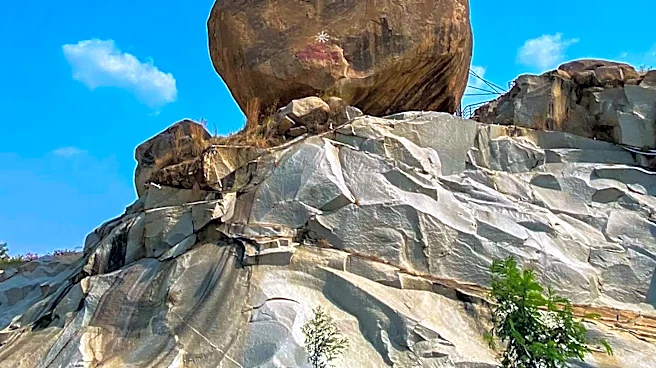
In Madhya Pradesh, India, a stone revered by the Baiga tribe has been identified as a rare coral fossil dating back 65 million years. The discovery was made by the Madhya Pradesh directorate of archaeology, archives, and museums, which recognized the stone's
significance after a team documented the geological wealth of Dindori district. The Baiga tribe, classified as a particularly vulnerable tribal group, has protected the stone for centuries, considering it sacred. The fossil's age coincides with the era of dinosaurs, providing a glimpse into the region's ancient past. The Baiga's tradition of worshipping natural elements, such as rocks and trees, reflects their deep connection to the land. The fossil will be displayed in a new gallery at the state museum in Bhopal.
Why It's Important?
This discovery highlights the intersection of cultural heritage and scientific inquiry, showcasing the Baiga tribe's historical connection to their environment. The identification of the coral fossil not only enriches the understanding of India's geological history but also underscores the importance of preserving indigenous knowledge and traditions. The Baiga's intuitive recognition of the stone's value, despite lacking scientific tools, demonstrates the depth of traditional ecological knowledge. This finding may encourage further exploration of India's geological and cultural landscapes, potentially leading to more significant discoveries. Additionally, it emphasizes the need for collaboration between scientific communities and indigenous groups to preserve and understand cultural and natural heritage.