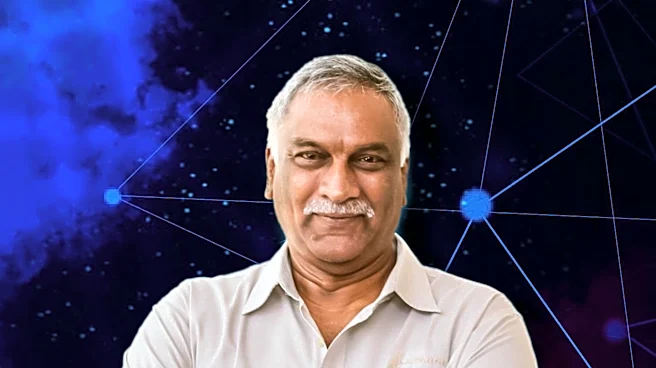

What's Happening?
Subtle Medical has announced the appointment of Lawrence Tanenbaum, MD, as its new executive medical director and chair of its medical advisory board. Dr. Tanenbaum has been an advisor to Subtle Medical since
2019. Prior to this new role, he served as VP, CTO, and director of advanced imaging at RadNet. His extensive background in medical imaging and expertise in enterprise imaging strategy and AI-enabled medical imaging are expected to significantly contribute to Subtle Medical's advancements. This appointment formalizes his leadership within the company's medical and strategic initiatives, building on his previous advisory capacity.
Why It's Important?
This appointment is significant for the medical imaging industry, particularly in the U.S., as it brings a highly experienced leader to the forefront of AI-enabled medical imaging development. Dr. Tanenbaum's expertise from RadNet, a major player in diagnostic imaging, suggests a strategic move by Subtle Medical to enhance its technological and clinical offerings. His leadership could accelerate the integration of artificial intelligence into medical diagnostics, potentially leading to more efficient and accurate patient care. This development could influence industry standards and adoption rates of AI technologies in healthcare, benefiting both providers and patients by improving diagnostic workflows and outcomes.
What's Next?
Following Dr. Tanenbaum's appointment, Subtle Medical is likely to further integrate AI into its medical imaging solutions, potentially leading to new product developments or enhancements. His role as chair of the medical advisory board suggests a focus on clinical validation and strategic direction for the company's technology. The industry can anticipate Subtle Medical to leverage Dr. Tanenbaum's experience to strengthen its position in the competitive medical technology market, possibly through new partnerships or expanded service offerings. This could also influence broader trends in medical imaging, pushing for greater adoption of AI-driven tools across U.S. healthcare facilities.
Beyond the Headlines
Dr. Tanenbaum's move highlights a growing trend in the healthcare sector: the increasing convergence of medical expertise with advanced technology, particularly artificial intelligence. His dual role as a medical director and a technology leader underscores the critical need for clinicians to guide the development and implementation of AI in healthcare to ensure ethical, effective, and patient-centric solutions. This appointment could set a precedent for how medical technology companies structure their leadership, emphasizing the importance of clinical oversight in technological innovation. It also reflects the ongoing shift towards data-driven medicine and the potential for AI to transform diagnostic processes, raising questions about future workforce training and the evolving role of radiologists.