





What's Happening?
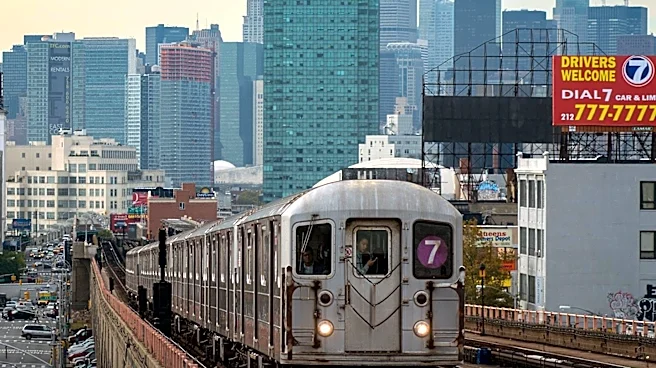
New York City is exploring a thermal energy network to address extreme heat in subway stations. Mayor Zohran Mamdani, Governor Kathy Hochul, and the MTA announced a partnership to study this technology at the Brooklyn Bridge-City Hall and Chambers Street
stations. The system aims to capture excess underground heat and repurpose it to warm nearby municipal buildings during winter. This initiative, potentially the first of its kind in a U.S. transit system, seeks to improve conditions for subway riders and reduce energy costs. The study, costing $800,000, is part of broader efforts to make transit infrastructure more resilient to rising temperatures.
Why It's Important?
The proposed thermal energy network represents a significant step in addressing climate-related challenges in urban transit systems. By repurposing excess heat, the project could enhance passenger comfort and contribute to energy efficiency, aligning with sustainability goals. This initiative reflects a growing trend of integrating innovative technologies to improve public infrastructure. If successful, it could serve as a model for other cities facing similar challenges, potentially influencing public policy and urban planning strategies across the U.S.
What's Next?
The study will determine the feasibility of implementing the thermal energy network, with a contract expected to be awarded in the fall. If the site proves suitable, design work could begin in early 2027. The project is part of a larger renovation plan for the Chambers Street station, funded by congestion pricing revenue. As the study progresses, stakeholders will likely monitor its outcomes to assess the potential for broader application in other transit systems.