






What's Happening?
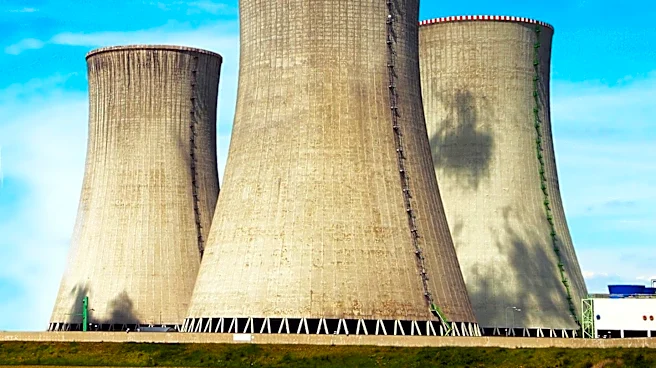
China has approved the construction of eight new nuclear reactors, marking a significant expansion in its nuclear energy capacity. The State Council, led by Premier Li Qiang, sanctioned the development of three pairs of Hualong One reactors at the Jinqimen,
Taipingling, and Zhuanghe sites, alongside two Guohe One reactors at the Laiyang site. These projects are part of China's broader strategy to enhance its nuclear power infrastructure, with the Hualong One 2.0 reactors being highlighted as advanced pressurized water reactor technology. The China National Nuclear Corporation (CNNC) and State Power Investment Corporation are spearheading these projects, emphasizing adherence to global safety standards.
Why It's Important?
This development underscores China's commitment to expanding its nuclear energy capabilities as part of its strategy to meet growing energy demands and reduce carbon emissions. By increasing its nuclear capacity, China aims to bolster its energy security and reduce reliance on fossil fuels, aligning with its net-zero targets by 2060. The construction of these reactors also reflects China's technological advancements in nuclear power, potentially positioning it as a leader in the global nuclear energy sector. The projects are expected to generate significant economic activity and create jobs, contributing to regional development.
What's Next?
The approved projects are set to proceed with preparatory work, with construction expected to follow. As these reactors come online, they will contribute to China's energy grid, supporting its transition to cleaner energy sources. The focus on safety and innovation in these projects may influence global nuclear energy standards and practices. Additionally, China's continued investment in nuclear technology could lead to further international collaborations and export opportunities for its nuclear technology.