







What's Happening?
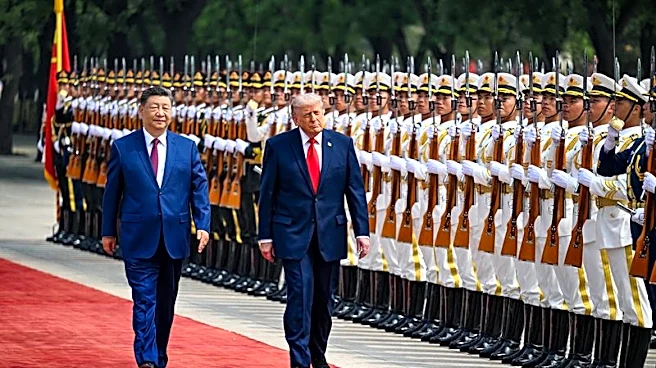
President Trump recently concluded a summit with Chinese President Xi Jinping in Beijing, where discussions focused on economic cooperation and the Taiwan issue. Despite Trump's attempts to build a personal rapport with Xi, the Chinese leader remained
focused on business, offering no significant concessions. The summit highlighted a shifting power dynamic, with China asserting its growing influence. Trump's deference to Xi marked a notable shift in his typically assertive diplomatic style, reflecting the complexities of U.S.-China relations.
Why It's Important?
The summit underscores the evolving geopolitical landscape, where China's rising influence challenges traditional U.S. dominance. Trump's approach to Xi, characterized by personal overtures and a focus on relationship-building, suggests a strategic pivot in U.S. foreign policy. This development has significant implications for global trade, security, and diplomatic relations, as the U.S. navigates its position in a multipolar world. The lack of concrete outcomes from the summit may also impact domestic perceptions of Trump's foreign policy effectiveness.
What's Next?
Future U.S.-China relations will likely continue to be shaped by economic and security concerns, particularly regarding Taiwan. The U.S. may need to balance its strategic interests with maintaining a cooperative relationship with China. Trump's administration will face pressure to clarify its stance on Taiwan and other contentious issues, as stakeholders in both countries monitor developments closely. The outcome of this summit may influence future diplomatic engagements and policy decisions.