








What's Happening?
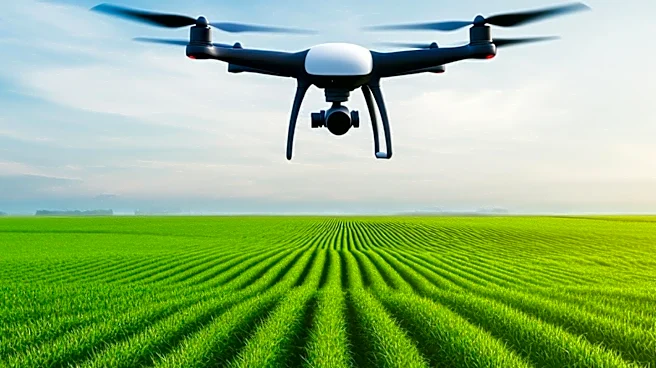
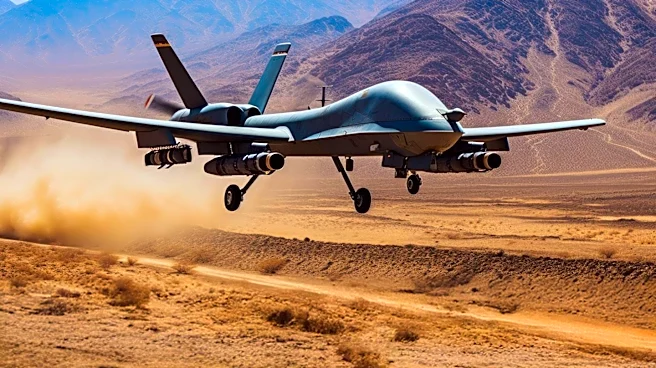
The US Army has successfully conducted a trial using a drone to clear a wire obstacle without deploying soldiers. This trial involved the Mule 28 drone, developed by Lorica Technologies, which was used to hoist a Bangalore torpedo to breach concertina
wire. The Mule 28 is a heavy-lift drone capable of carrying 200 pounds, equipped with sensors for targeting and artificial intelligence processing. The trial was conducted by the Oregon Army National Guard combat engineers at the Orchard Combat Training Center. The initiative was inspired by the use of drones in the war in Ukraine, highlighting the Army's efforts to adopt new technologies for dangerous missions. The drone working group, led by Lt. Col. Eric Zimmerman, was established to explore the use of commercial drones for such tasks, aiming to reduce the high casualty rates associated with traditional breaching operations.
Why It's Important?
This development is significant as it represents a shift in military tactics, potentially reducing the risk to soldiers during one of the most dangerous battlefield tasks. The use of drones for breaching operations could lead to fewer casualties, as traditional methods assume a high rate of soldier loss. The successful trial of the Mule 28 drone demonstrates the Army's commitment to integrating advanced technology into its operations, potentially transforming how military engineers approach obstacle breaching. This innovation could also influence broader military strategies, encouraging further exploration of autonomous systems in combat scenarios. The trial's success may prompt increased investment in drone technology and artificial intelligence within the military, potentially leading to more autonomous and efficient battlefield operations.
What's Next?
Following the successful trial, the next steps involve further development and testing of the Mule 28 drone, with a focus on integrating AI for obstacle identification. This advancement aims to create a more autonomous breaching capability, reducing the need for human input and minimizing the risk of jamming or early initiation. The Army may also explore expanding the use of drones in other areas, such as resupply missions or as rocket launchers. The continued evolution of drone technology in military applications could lead to broader adoption across different branches of the armed forces, potentially reshaping military tactics and strategies in the future.