






What's Happening?
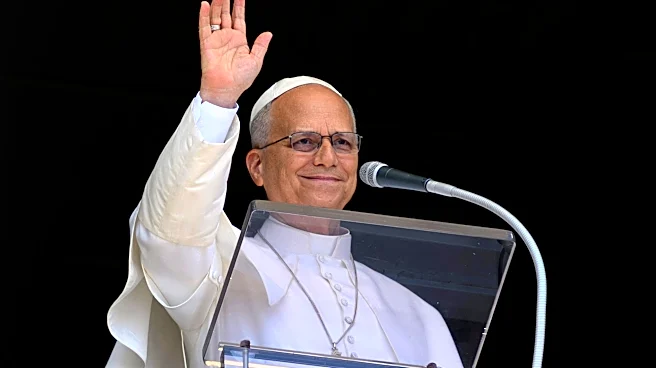
Pope Leo XIV recently addressed participants at a meeting titled 'The Future of AI: A Dialogue Between the Vatican and the Scientific World on the Developments and Applications of Intelligent Technologies.' During his address, Pope Leo stressed the critical
importance of maintaining human oversight in decisions that affect human life, freedom, and the use of force, asserting that such responsibilities must never be delegated to artificial intelligence. He outlined five key considerations regarding AI, drawing from his encyclical 'Magnifica Humanitas': the future of AI is not predetermined, machines are tools and not persons, certain decisions are non-delegable, intelligent technologies must serve the common good, and robust institutions are necessary to implement ethical AI principles. The Pope highlighted concerns shared by attendees regarding the rapid development of AI and the need for more proactive ethical guidance. He also reiterated Pope Francis's 2024 statement to G7 leaders, emphasizing that no machine should ever be able to choose whether to take a human life. Pope Leo urged states meeting in Geneva in November to consider banning lethal autonomous weapons.
Why It's Important?
Pope Leo's pronouncements carry significant moral and ethical weight, influencing discussions on AI governance globally, including within the United States. His emphasis on human dignity and the common good in AI development challenges the purely technological or profit-driven approaches often seen in the tech industry. By advocating for non-delegable human oversight in critical decisions, the Vatican is pushing for a framework that prioritizes human values over algorithmic efficiency, potentially impacting how AI is regulated and developed in democratic societies. This stance could encourage policymakers and tech companies to adopt more human-centric design principles and accountability mechanisms. The call for a ban on lethal autonomous weapons also adds a powerful voice to international efforts to control the proliferation of AI in military applications, which has direct implications for U.S. defense policy and its role in global arms control. The Pope's message underscores the need for a global, interdisciplinary approach to AI ethics, urging collaboration between scientific, governmental, and religious bodies to ensure AI serves humanity rather than diminishes it.
What's Next?
The Vatican's continued engagement on AI ethics is likely to foster further dialogue among religious leaders, scientists, policymakers, and industry stakeholders. Pope Leo's call for shared standards, independent oversight, and clear accountability mechanisms suggests a push for concrete regulatory frameworks. This could influence international discussions at forums like the United Nations and other global bodies, potentially leading to new guidelines or treaties on AI development and deployment. The upcoming meeting in Geneva regarding lethal autonomous weapons will be a critical juncture where the Vatican's stance could bolster arguments for stricter controls or outright bans. Within the U.S., these ethical considerations may fuel ongoing debates in Congress and among technology companies about responsible AI innovation, data privacy, and the future of work. Expect continued advocacy from faith-based organizations and civil society groups, leveraging the Pope's message to press for ethical safeguards and human-centered AI policies. The Vatican may also continue to host dialogues to bridge the gap between scientific advancements and ethical considerations.
Beyond the Headlines
Pope Leo's intervention transcends immediate policy debates, delving into fundamental questions about humanity's relationship with technology and the nature of decision-making in an increasingly automated world. His warning against reducing individuals to mere data points highlights a profound concern about dehumanization in the digital age, urging a re-evaluation of how AI systems categorize and impact human lives. The emphasis on machines as tools, not persons, challenges emerging philosophical and legal discussions around AI personhood and rights, reinforcing the unique value of human consciousness and responsibility. This perspective could shape long-term societal norms regarding AI, fostering a culture where technological progress is always measured against its impact on human flourishing and dignity. Furthermore, the Vatican's consistent voice on AI ethics could inspire broader ethical movements, encouraging a more holistic approach to technological development that integrates moral, social, and spiritual dimensions alongside economic and scientific ones, potentially leading to a redefinition of 'progress' itself.