
What's Happening?
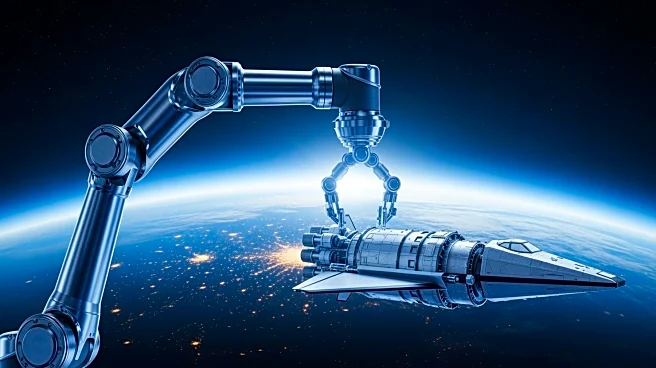
The Japan Aerospace Exploration Agency's (JAXA) HTV-X1 cargo spacecraft has successfully departed from the International Space Station (ISS) after being released by the Canadarm2 robotic arm. The release occurred at 12 p.m. EST while the ISS was orbiting
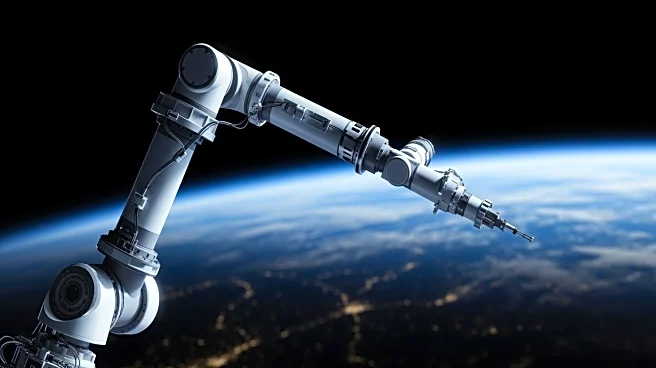
approximately 260 miles above the Pacific Ocean. The HTV-X1 had been docked at the station for over four months, during which it delivered more than 9,000 pounds of supplies, scientific investigations, commercial products, hardware, and other cargo for NASA and its international partners. The Canadarm2, a key component of the ISS, played a crucial role in detaching the spacecraft from the Earth-facing port of the station's Harmony module before its release.
Why It's Important?
The successful release and departure of the HTV-X1 spacecraft underscore the importance of international collaboration in space exploration. The mission highlights the role of robotic technology, such as the Canadarm2, in facilitating complex operations in space. This event is significant for NASA and its partners as it ensures the continuous supply of essential materials and scientific equipment to the ISS, supporting ongoing research and operations. The collaboration between JAXA and NASA exemplifies the global effort required to maintain and advance human presence in space, which has implications for future missions and the development of space technology.
What's Next?
Following its departure from the ISS, the HTV-X1 spacecraft will continue its mission as planned. The successful completion of this phase may lead to further collaborations between JAXA and NASA, potentially involving more advanced cargo missions or technological exchanges. The ongoing partnership could also pave the way for future innovations in space logistics and robotic systems, enhancing the efficiency and safety of operations aboard the ISS and other space missions.