







What's Happening?
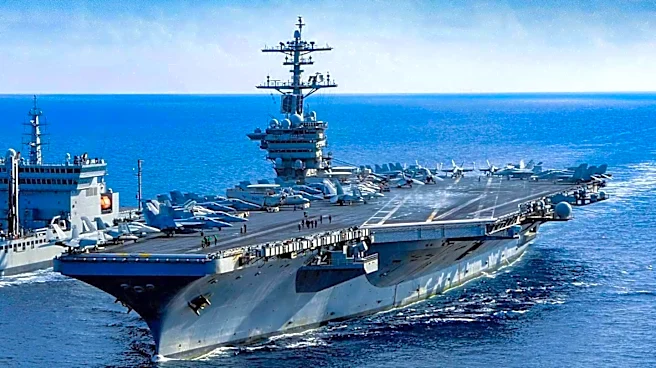
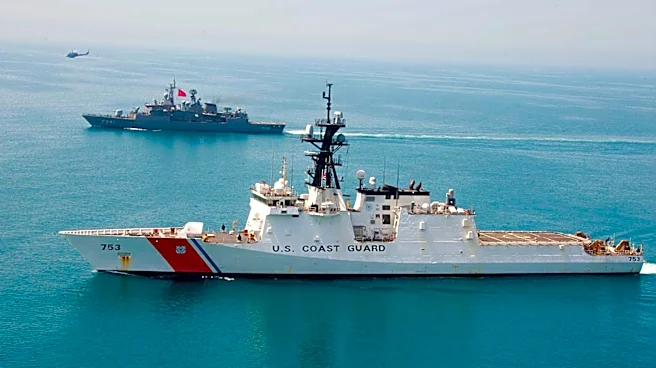
The U.S. Navy's aircraft carriers are actively participating in multinational maritime exercises to enhance tactical skills and interoperability with allied forces. The USS Nimitz recently joined 25 other ships for a fleet formation exercise in the Atlantic
Ocean as part of Fleet Exercise (FLEETEX) 250. This exercise involved warships, aircraft, and personnel from the U.S. and 13 allied countries. Meanwhile, the USS Theodore Roosevelt arrived in Hawaii for the Rim of the Pacific (RIMPAC) 2026, the largest iteration of the exercise, involving 30 partner nations. These exercises aim to strengthen military readiness and cooperation among participating nations.
Why It's Important?
These exercises are crucial for maintaining global maritime security and ensuring the U.S. Navy's readiness to respond to potential threats. By collaborating with allied forces, the U.S. enhances its strategic partnerships and demonstrates its commitment to collective defense. The presence of U.S. carriers in key regions also serves as a deterrent to potential adversaries. As geopolitical tensions rise, such exercises underscore the importance of military alliances and the need for coordinated responses to global security challenges.
What's Next?
Following the exercises, the USS Nimitz and other ships will participate in the International Naval Review in New York City. The continued presence of U.S. carriers in strategic locations, such as the Middle East, suggests ongoing vigilance amid regional tensions. Future exercises and deployments will likely focus on further enhancing interoperability and readiness. The integration of new technologies, such as the MQ-25A Stingray drone, indicates a shift towards modernizing naval capabilities to address evolving threats.