



What's Happening?
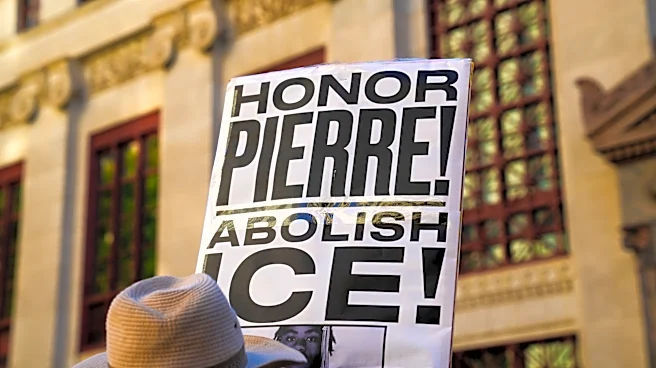
More than 100 individuals gathered last Friday outside the Federal Building in Bismarck, North Dakota, to protest against U.S. Immigration and Customs Enforcement (ICE). The demonstration was organized to advocate for the state delegation to communicate
to Congress a desire for ICE agents to cease operations in North Dakota. This protest follows the arrest of 13 people in the Bismarck-Mandan area by ICE the previous week. As of last Friday, 17 detainees are being held at the Burleigh Morton Detention Center. Governor Kelly Armstrong stated that he has not received any information regarding these arrests from federal officials. The protest highlights growing local opposition to federal immigration enforcement activities within the state.
Why It's Important?
This protest in Bismarck underscores increasing tensions between local communities and federal immigration enforcement agencies across the U.S. The demand for the state delegation to intervene reflects a broader movement where state and local governments are being pressured to limit or reject federal immigration operations. Such actions can lead to significant policy debates at both state and national levels regarding jurisdiction, immigration laws, and civil liberties. The lack of communication from federal officials to Governor Armstrong also points to potential breakdowns in inter-governmental cooperation, which can complicate responses to federal actions and impact public trust. This event could influence future legislative efforts concerning immigration enforcement and local autonomy.
What's Next?
The organizers of the protest will likely continue to pressure North Dakota's state delegation to address their concerns with Congress regarding ICE's presence. Further demonstrations or advocacy efforts could be planned if their demands are not met. Governor Armstrong may seek more direct communication with federal agencies to understand the scope and reasons behind the recent arrests, potentially leading to formal inquiries or discussions between state and federal authorities. The ongoing detention of individuals at the Burleigh Morton Detention Center will also remain a point of focus for activists and legal aid organizations, who may pursue legal avenues to challenge the detentions or conditions. This situation could also prompt other states to re-evaluate their stance on federal immigration enforcement within their borders.
Beyond the Headlines
The protest in Bismarck reflects a deeper national conversation about immigration policy, federal overreach, and the rights of individuals within the U.S., regardless of their immigration status. It touches upon ethical considerations regarding the treatment of detainees and the role of local communities in shaping national policy. The call for state delegations to intervene with Congress highlights the complex interplay between federal mandates and state sovereignty, particularly in areas of law enforcement. This event could contribute to a broader shift in public perception and political discourse surrounding immigration, potentially leading to more localized resistance movements or calls for comprehensive immigration reform that addresses both enforcement and humanitarian concerns. The incident also raises questions about transparency and accountability of federal agencies to state governments and the public.