







What's Happening?
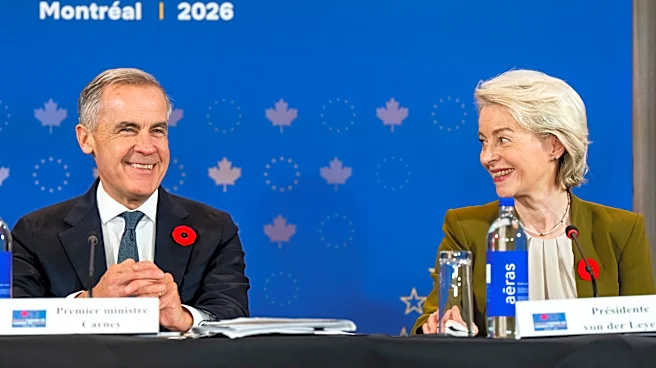
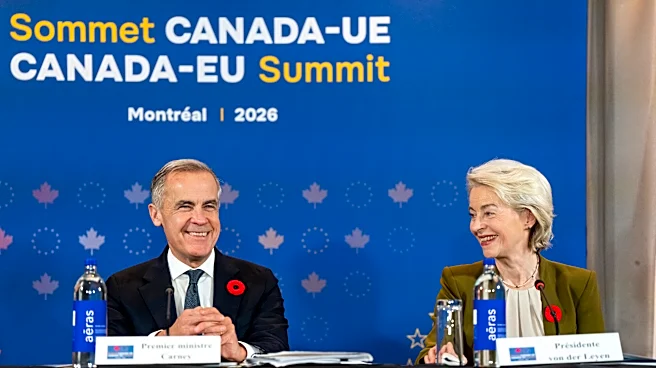
Canada and the European Union have launched an 'Alliance for the Future' at their summit in Montreal, Quebec, aiming to deepen cooperation across six strategic sectors: trade, digital technologies, critical raw materials, energy, financial services, and defense.
This initiative seeks to create a common economic security space and enhance collective sovereignty in a rapidly changing global environment. Key announcements include the conclusion of a new Canada-EU Competition Agreement and a Digital Trade Agreement, Canadian participation in the European High Performance Computing Joint Undertaking (EuroHPC), and negotiations for Canada to join the next Horizon Europe research program. The partnership also involves strengthening critical minerals supply chains, exploring increased LNG exports, and improving secure international connectivity through new subsea cable infrastructure between Canada, Europe, and Asia. Both entities are working towards an unprecedented form of association for Canada with the EU, short of full membership, to be defined by their 2027 summit.
Why It's Important?
This alliance is significant as it aims to bolster the economic security and sovereignty of both Canada and the EU by reducing vulnerabilities and building resilient supply chains. For the U.S., this deepened partnership between two major allies could have several implications. Enhanced cooperation in critical raw materials and energy could diversify global supply chains, potentially reducing reliance on other nations and impacting commodity markets. The focus on digital trade and technology, including AI and supercomputing, could set new international standards and foster innovation that might influence global tech governance. Furthermore, strengthened defense cooperation and secure connectivity initiatives could contribute to broader Western security frameworks, affecting geopolitical dynamics and strategic alliances. The development of a closer economic bloc between Canada and the EU might also influence trade flows and investment patterns, potentially creating new opportunities or challenges for U.S. businesses operating in these markets.
What's Next?
In the coming months, Canada and the EU will negotiate the specifics of Canada's potential 'Associate Member' status, which will define the substance, scale, and scope of this new form of membership. Further negotiations are also planned to expand Canada's participation in Erasmus+, Europe's student and skills exchange program, and for Canada to join the next Horizon Europe research program. The partners will also continue to assess cable routes and points of interconnection for new subsea cable infrastructure to improve secure international connectivity. Additionally, joint working groups will explore opening financial markets further to each other's banks, insurers, and fintech companies. The newly established Alliance for the Future will also involve ongoing dialogues on the Arctic, foreign information manipulation and interference, climate security, and transport, indicating a broad and sustained effort to integrate policies and initiatives across various sectors.
Beyond the Headlines
The 'Alliance for the Future' signifies a strategic recalibration in international relations, moving beyond traditional geographical boundaries to forge deeper partnerships based on shared values and economic security needs. This initiative reflects a growing trend among democratic nations to build resilience against geopolitical tensions, economic fragmentation, and technological competition. The pursuit of an 'ever-closer association' for Canada with the EU, short of full membership, could serve as a new model for international cooperation, potentially influencing how other non-member states engage with large economic blocs. This could lead to a more multi-polar global order where alliances are formed not just on military or political alignment, but also on shared economic and technological sovereignty. The emphasis on secure digital infrastructure and critical raw materials also highlights a recognition of these as fundamental pillars of national security and economic stability in the 21st century, potentially driving further international collaboration and competition in these vital areas.