





What's Happening?
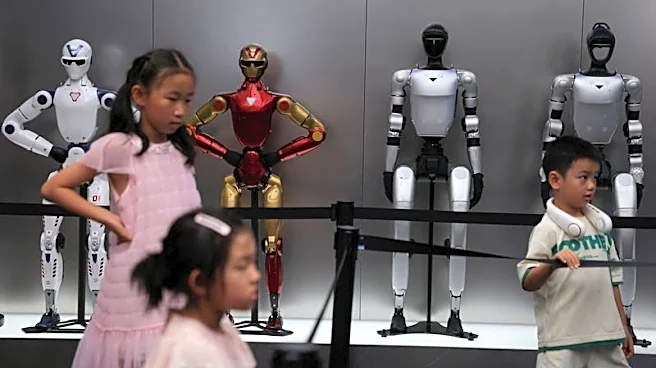
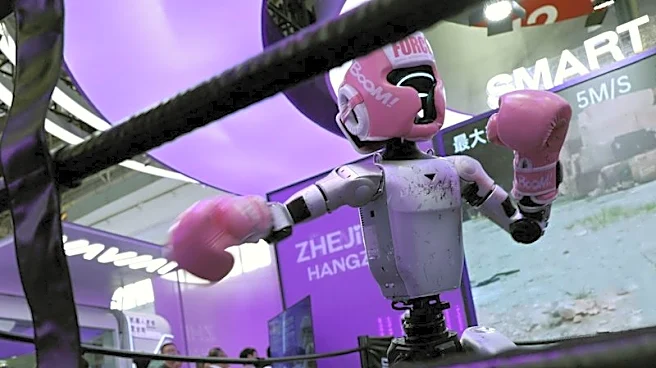
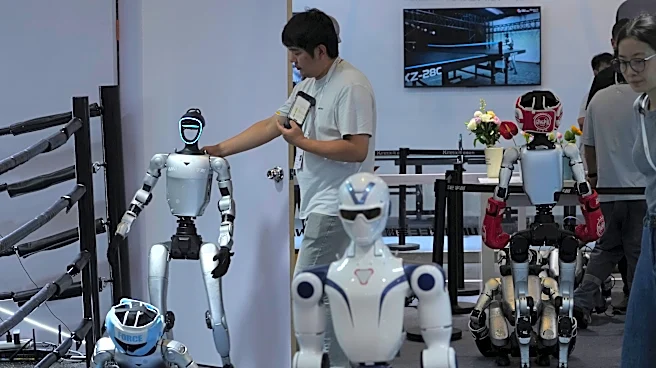
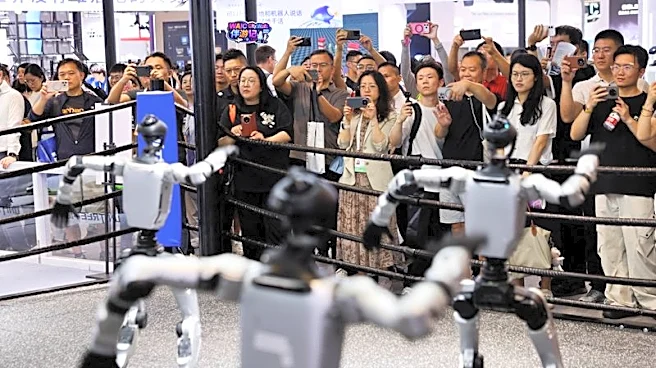
The second World Humanoid Robot Games are scheduled to take place in Beijing in August 2026 at the National Speed Skating Oval, known as the 'Ice Ribbon.' This event will showcase 26 competitive events, including athletic challenges like football, gymnastics,
weightlifting, martial arts, street dance, and tug-of-war. Beyond sports, the games will also incorporate real-world scenarios, testing robots in environments such as factories, hotels, homes, hospitals, and emergency response situations. The participation in these games is projected to increase by 138% compared to the inaugural event. The competition aims to push the boundaries of humanoid robot capabilities, moving from basic mobility tests to evaluating their ability to perform practical jobs. Companies like Unitree Robotics, whose stock recently surged in its Shanghai debut, are among those making significant advancements in the humanoid robot sector, coinciding with the World Robot Conference in Beijing.
Why It's Important?
The World Humanoid Robot Games highlight the rapid advancements and growing global interest in robotics, particularly in the development of humanoid robots. The inclusion of both athletic and practical tasks underscores a significant shift in robotics research and development, moving towards more versatile and functional machines. This event serves as a crucial platform for showcasing technological innovation and fostering competition among leading robotics companies and research institutions worldwide. The focus on real-world applications, such as factory work, hotel services, and emergency response, indicates a future where humanoid robots could play a substantial role in various industries, potentially transforming labor markets and daily life. The increased participation and the concurrent World Robot Conference, featuring product launches and industry forums, further emphasize the accelerating pace of development and commercialization in the robotics sector.
What's Next?
The upcoming World Humanoid Robot Games in August 2026 will likely serve as a major benchmark for the progress of humanoid robotics. Following the event, there could be increased investment and research into the specific areas where robots demonstrate exceptional performance or reveal limitations. The outcomes of the competitions, particularly in real-world scenarios, are expected to influence future design and development priorities for robotics companies. Furthermore, the event's success could spur greater public and private sector interest in integrating humanoid robots into various industries, potentially leading to new partnerships, funding opportunities, and accelerated market adoption. The concurrent World Robot Conference will also continue to facilitate industry discussions, product launches, and collaborations, shaping the immediate future of robotics technology and its applications.
Beyond the Headlines
The World Humanoid Robot Games represent more than just a competition; they symbolize a broader societal and technological evolution. The integration of humanoid robots into practical, everyday tasks raises profound questions about the future of work, human-robot interaction, and ethical considerations in artificial intelligence. As robots become more capable of performing complex jobs, discussions around job displacement, the need for new skill sets, and the potential for human-robot collaboration will intensify. The event also reflects a global race for technological supremacy, with nations like China heavily investing in robotics to gain a competitive edge. The development of increasingly sophisticated humanoid robots could lead to significant shifts in economic structures, social norms, and even our understanding of intelligence and consciousness, prompting ongoing debates about the long-term implications of these advanced machines.