







What's Happening?
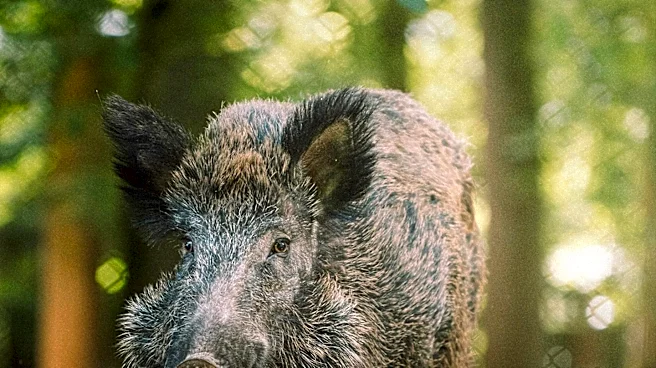
Florida's state parks are experiencing significant ecological damage due to widespread invasions of feral swine, also known as wild boar or feral pigs. These animals are present in every county of Florida and are a common sight in parks such as Paynes
Prairie Preserve and Myakka River State Park. The feral swine cause extensive damage by rooting up meadows and native habitats, disrupting ecosystems that support diverse wildlife, including wild bison and horses. Beyond habitat destruction, these animals pose a health risk, carrying numerous diseases and having transmitted trichinosis to the endangered Florida panther. Their rapid breeding rates and intelligence make them exceptionally difficult to control, posing a continuous challenge to the state's natural landscapes and unique wildlife.
Why It's Important?
The proliferation of feral swine in Florida's state parks represents a critical environmental and economic challenge. The destruction of native habitats by these invasive species directly threatens biodiversity, including endangered species like the Florida panther, and can alter the ecological balance of sensitive ecosystems. Economically, the damage to park infrastructure and the resources required for management and control efforts place a significant burden on state budgets. Furthermore, the presence of disease-carrying animals can impact public health and the state's tourism industry, which heavily relies on its natural attractions. This issue underscores the broader problem of invasive species management and its long-term implications for environmental conservation and public welfare.
What's Next?
Florida's state park authorities and wildlife agencies will likely continue to implement and explore various strategies to manage and control the feral swine population. These efforts typically include trapping, targeted culling, and potentially experimental contraceptives, though the effectiveness of these methods is often limited by the animals' rapid reproduction and evasive behavior. Increased public awareness campaigns may also be launched to educate residents and visitors about the impact of feral swine and the importance of not contributing to their spread. Research into more effective and sustainable control methods will be crucial, as the ongoing battle against these invasive species is expected to persist, requiring continuous adaptation and resource allocation.
Beyond the Headlines
The struggle against feral swine in Florida highlights a complex interplay between human activity, ecological balance, and the resilience of invasive species. The historical introduction of these animals, initially for food and hunting, has led to an unintended and severe ecological crisis. This situation raises ethical questions about wildlife management, particularly regarding culling and the balance between conservation goals and animal welfare. It also points to the broader global issue of invasive species, which are often a consequence of human migration and trade, and their profound, often irreversible, impact on native ecosystems. The ongoing challenge in Florida serves as a stark reminder of the long-term consequences of introducing non-native species into new environments.