


What's Happening?
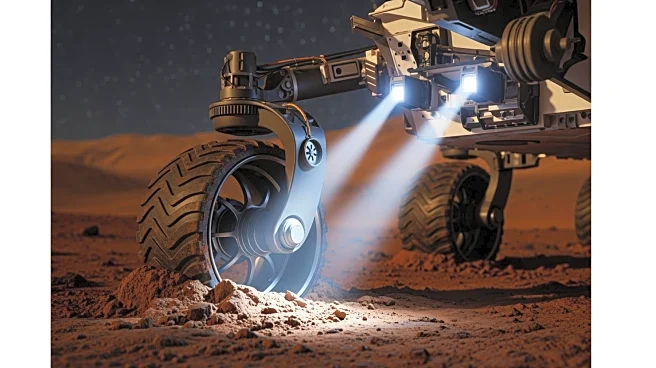
NASA's Curiosity Mars rover, equipped with LED lights, has been capturing images of the Martian surface at night. A recent image taken on December 6 shows the rover's lights illuminating a hole drilled into a rock named 'Nevado Sajama.' The rover, which
has been exploring Mars for nearly 14 years, uses its lights to illuminate areas that are otherwise in shadow during the day. This capability allows scientists to examine geological features and collect data in low-light conditions. The Mars Hand Lens Imager, one of the rover's 17 cameras, captures true-color images, aiding in the study of Mars' geology.
Why It's Important?
The use of LED lights on the Curiosity rover enhances the ability to study Mars' surface in detail, even in low-light conditions. This capability is crucial for understanding the planet's geological history and searching for signs of ancient life. By illuminating areas that are typically in shadow, scientists can gather more comprehensive data, potentially leading to new discoveries about Mars' past. The technology also demonstrates the adaptability and innovation required for successful space exploration, paving the way for future missions.
Beyond the Headlines
The ability to capture images at night on Mars not only aids scientific research but also provides a unique perspective on the planet's environment. The eerie images of the Martian night sky, combined with the rover's exploration, offer a glimpse into the challenges and wonders of space exploration. This technological advancement underscores the importance of continued investment in space research and the potential for groundbreaking discoveries.