
What's Happening?
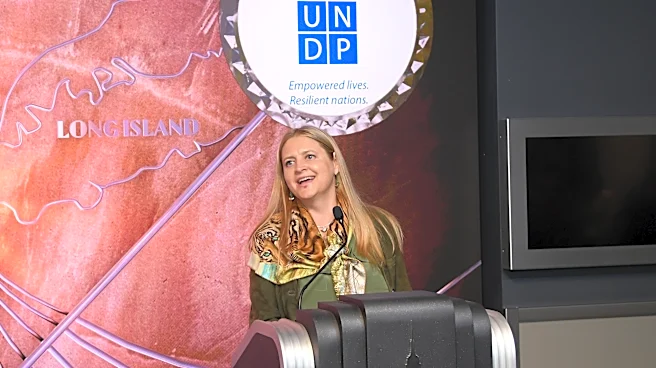
Tishiko “Tish” King, a Kulkalaig woman from Masig Island and founder of Just Futures Collab, is advocating for Indigenous-led climate solutions and a re-evaluation of climate finance distribution. King, a marine
biologist and ocean advocate, emphasizes that her identity and culture are deeply connected to the ocean and her ancestral lands. She highlights the severe impacts of rising seas, king tides, and coastal erosion on low-lying islands like Masig, which threaten the cultural connections and practices of Indigenous communities. King's advocacy stems from her personal experiences, including witnessing the effects of the Pacific Adventurer oil spill in 2009, which underscored the disparity between climate crisis knowledge and action. She argues that climate change is not solely an environmental issue but also deeply intertwined with human rights, self-determination, and cultural preservation for Indigenous peoples. Her organization, Just Futures Collab, aims to shift resources and decision-making power closer to the communities most affected by climate change, promoting an Indigenous-governed, community-powered approach to climate finance.
Why It's Important?
King's work is important because it challenges the conventional top-down approach to climate finance and advocacy, which often overlooks or inadequately supports Indigenous communities. By advocating for Indigenous-led solutions, she highlights the critical role of traditional knowledge and local perspectives in effectively addressing climate change. The current systems, she notes, tend to concentrate resources and decision-making power in institutions far removed from those experiencing the direct consequences, leading to a profound injustice in climate finance. This approach often results in Indigenous peoples, who are often a minority within a minority, being overlooked by funding systems. Her efforts to reframe the conversation from 'How do we get people to care about climate change?' to 'How do we change who holds the money, who makes the decisions, and whose knowledge and futures are valued?' underscore a fundamental shift needed for equitable and effective climate action. The success of such initiatives could lead to more sustainable and culturally appropriate climate resilience strategies, benefiting both Indigenous communities and the broader global effort against climate change.
What's Next?
The ongoing advocacy by Tishiko King and Just Futures Collab will likely continue to push for reforms in climate finance and policy to ensure that resources reach Indigenous communities directly. This includes advocating for funding mechanisms that recognize Aboriginal and Torres Strait Islander peoples as rights-holders, knowledge-holders, and leaders in shaping future climate strategies. The focus will remain on building stronger networks of solidarity and support for activists and environmental defenders, ensuring they can speak out without fear of professional, political, or reputational repercussions. Future efforts will also involve scrutinizing how funding is distributed, which communities can access it, and whether it aligns with the needs and priorities of the most affected populations. The goal is to establish a climate finance system that is grounded in Indigenous governance, trust, reciprocity, and community decision-making, ultimately empowering Indigenous peoples to protect their lands, waters, and cultures.
Beyond the Headlines
The deeper implications of Tishiko King's advocacy extend to the ethical and legal dimensions of environmental justice and Indigenous rights. Her work highlights the inherent link between protecting the environment and upholding the rights of Indigenous Peoples, who have historically cared for these lands and waters. The challenge she identifies—that activists can be encouraged to speak about climate change as long as they don't challenge the systems driving it—reveals a systemic issue within broader environmental movements. This tension between being heard and influencing change, coupled with the burden on Indigenous communities to repeatedly explain their lived experiences, points to a need for fundamental shifts in power dynamics and resource allocation. The long-term impact could be a redefinition of climate leadership, moving towards models that prioritize equity, self-determination, and the integration of diverse knowledge systems, fostering a more inclusive and effective global response to climate change.