







What's Happening?
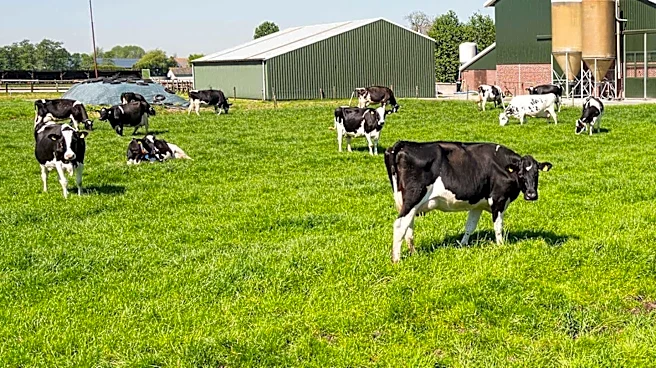
On October 8, 2026, the Yakima Health District and the Washington State Department of Agriculture confirmed an outbreak of highly pathogenic avian influenza (HPAI) H5N1 in dairy cattle across two farms in Yakima County. This marks the first detection
of HPAI in dairy cattle within Washington state. Following this initial report, additional positive farms have been identified in Yakima County, and one farm in Benton County also reported detections. On October 15, a human case of avian influenza was confirmed in a Yakima County resident who had exposure to infected dairy cattle at one of the affected farms. This individual isolated at home and did not experience severe illness or require hospitalization. The Washington State Department of Health is collaborating with local health jurisdictions, the Washington State Department of Agriculture, and federal agencies to monitor the situation. The risk of HPAI infection to the general public is currently considered low, with no evidence of human-to-human transmission.
Why It's Important?
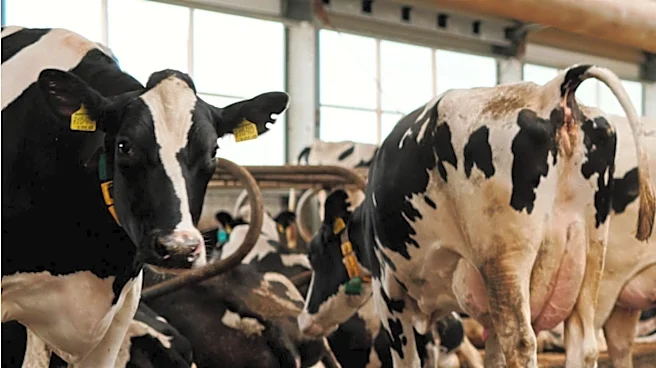
The detection of H5N1 in Washington's dairy cattle and the subsequent human case represent a significant development for public health and the agricultural sector. While the risk to the general public is low, the presence of the virus in dairy herds raises concerns for agricultural workers who have close or prolonged contact with infected animals. This situation underscores the ongoing threat of zoonotic diseases and the need for robust surveillance and biosecurity measures in farming operations. The economic implications for the dairy industry could be substantial, potentially leading to production losses and increased operational costs due to testing and containment efforts. The incident also highlights the importance of public health advisories regarding the consumption of unpasteurized dairy products, as pasteurization is known to kill the virus.
What's Next?
The Washington State Department of Agriculture is supporting farms in investigating and testing for HPAI if sick cattle are identified. Local health jurisdictions, with the support of the Washington State Department of Health, are monitoring workers for symptoms of avian influenza, and testing for HPAI is available at the state's Public Health Laboratories. Healthcare providers are advised to screen patients with influenza-like illness for contact with sick or dead animals, including dairy cattle, and to immediately report suspected cases. Residents are urged to avoid contact with sick or dead wild birds or animals and to report any unusual illnesses in poultry or livestock. The state will continue to emphasize the importance of seasonal flu vaccination, as seasonal influenza poses a greater risk to the general population.
Beyond the Headlines
This outbreak brings to light the complex interplay between animal health, agricultural practices, and human public health. The spread of H5N1 to dairy cattle, and subsequently to a human, underscores the evolving nature of avian influenza and its potential to cross species barriers. While human-to-human transmission has not been observed, the continuous monitoring of such events is crucial for understanding viral evolution and pandemic preparedness. The incident also highlights the ethical considerations surrounding animal welfare in outbreak situations, particularly the culling of affected animals. Furthermore, it reinforces the need for a 'One Health' approach, integrating human, animal, and environmental health efforts to effectively address emerging infectious diseases.