







What's Happening?
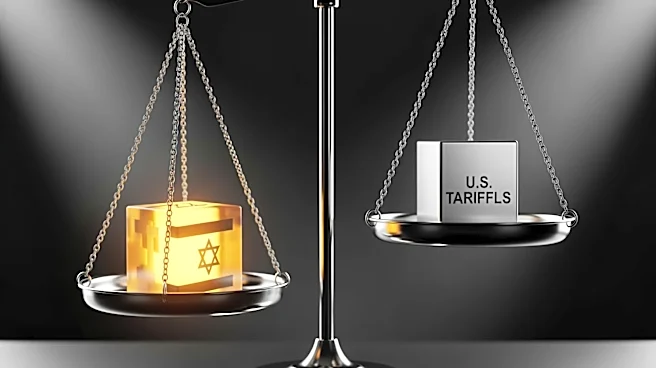
Israeli exporters are facing significant challenges due to the appreciation of the shekel and U.S. tariffs, which are eroding profitability and prompting some companies to consider relocating to the United States. According to a special analysis by the Israel Export
Institute, approximately 40% of Israel's high-tech exports, valued at around $38 billion, are directed to the U.S. market. Since 2020, these exports have grown by 180%, contributing significantly to the overall increase in high-tech exports. However, the strong shekel and U.S. tariffs are creating an unfavorable environment for Israeli exporters, leading to a decline in new startup formations and a contraction in R&D employment by 6.5%. The Israeli industry has been operating under challenging conditions for six consecutive years, including the COVID-19 pandemic, inflation, and geopolitical tensions, which have further complicated the situation for industrial exporters.
Why It's Important?
The current economic pressures on Israeli exporters have broader implications for both the Israeli and U.S. economies. For Israel, the potential relocation of companies to the U.S. could result in a loss of technological talent and economic activity, impacting the country's economic growth and innovation landscape. For the U.S., an influx of Israeli companies could enhance the technological sector, bringing in new innovations and potentially boosting local economies. However, this shift could also lead to increased competition for U.S. companies. The situation underscores the need for a comprehensive government response in Israel to support exporters, including tax policies that account for currency appreciation and incentives to retain R&D centers within the country.
What's Next?
A comprehensive government response is required to address the challenges faced by Israeli exporters. This includes implementing tax policies that consider currency appreciation, providing support for hedging foreign exchange risks, and removing logistical and regulatory barriers during wartime. Additionally, incentives to retain R&D centers in Israel and easing reserve duty burdens for employees in critical industrial sectors are necessary. The Ministry of Finance, the Ministry of Economy, the Israel Innovation Authority, and the Bank of Israel need to collaborate to develop effective strategies to support the export sector and prevent further erosion of Israel's industrial base.
Beyond the Headlines
The situation highlights the complex interplay between currency fluctuations, international trade policies, and domestic economic strategies. The appreciation of the shekel, while a sign of economic strength, poses challenges for exporters who rely on competitive pricing in international markets. The potential relocation of companies to the U.S. also raises questions about the long-term sustainability of Israel's high-tech sector and its ability to retain talent and innovation domestically. This development could lead to a reevaluation of Israel's economic policies and strategies to ensure that technological success translates into broad-based economic growth.