


What's Happening?
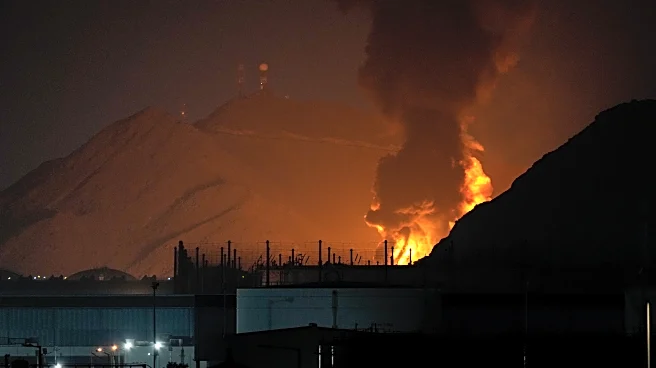
Recent conflicts in the Middle East have escalated, with drone strikes hitting major energy facilities, including a significant oil refinery in Bahrain. These attacks, attributed to Iran, have affected energy infrastructure across several countries, including Bahrain,
Kuwait, Qatar, Saudi Arabia, and the UAE. The strikes have disrupted operations at Qatar's Ras Laffan LNG facility, the largest in the world, leading to a shutdown and declaration of force majeure by QatarEnergy. This conflict marks a significant shift as energy facilities have largely been spared in past regional conflicts.
Why It's Important?
The attacks on energy infrastructure in the Middle East have significant implications for global energy markets, particularly for liquified natural gas (LNG). With Qatar being a major LNG supplier, the disruption could lead to shortages and increased prices, especially in Europe and Asia, where natural gas storage levels are low. The situation highlights the vulnerability of global energy supply chains to geopolitical conflicts and could have economic repercussions similar to those following Russia's invasion of Ukraine. The U.S., as a leading LNG exporter, may see increased demand for its exports, impacting domestic energy markets.
What's Next?
As the conflict continues, energy markets will likely experience volatility, with potential price spikes and supply shortages. Countries dependent on Middle Eastern LNG may seek alternative suppliers, such as Australia and Malaysia, to mitigate the impact. The U.S. may also play a crucial role in stabilizing global LNG supply. Diplomatic efforts to de-escalate the conflict and protect energy infrastructure will be critical in preventing further disruptions. The situation may prompt a reevaluation of energy security strategies and investments in alternative energy sources.