


What's Happening?
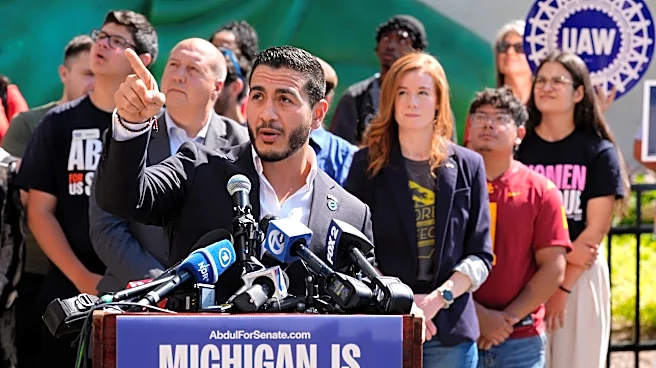
President Trump has publicly criticized Abdul El-Sayed, the Democratic primary winner for the Senate in Michigan, accusing him of harboring anti-Israel and anti-Semitic sentiments. El-Sayed, who could become Michigan's first Muslim senator, has been described
by Trump as someone who 'hates Israel and the Jewish people with a passion.' Trump's comments challenge El-Sayed's self-presentation as a candidate open to dialogue, casting doubt on his credibility and intentions if elected.
Why It's Important?
This development highlights the ongoing political tensions and divisions within the U.S., particularly concerning issues of race, religion, and foreign policy. Trump's remarks could influence voter perceptions and impact El-Sayed's campaign, potentially affecting the Democratic Party's strategy in Michigan. The situation also underscores the broader national discourse on diversity and representation in politics, as El-Sayed's candidacy represents a significant milestone for Muslim Americans seeking political office.
What's Next?
El-Sayed's response to Trump's accusations and his ability to navigate the political landscape will be crucial in the lead-up to the general election. The Democratic Party may need to address these criticisms and support El-Sayed in countering negative narratives. Additionally, this incident could prompt further discussions on the role of religion and ethnicity in American politics, influencing future campaigns and voter engagement strategies.