






What's Happening?
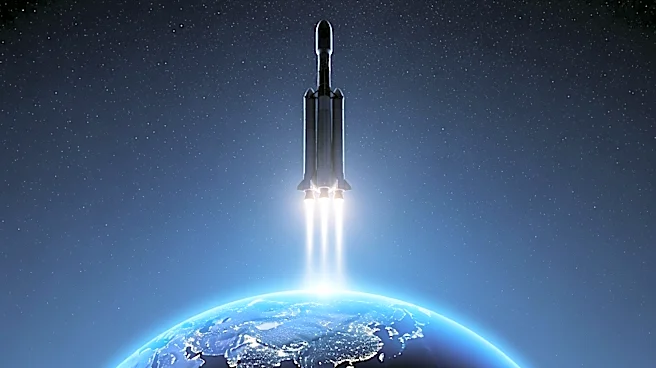
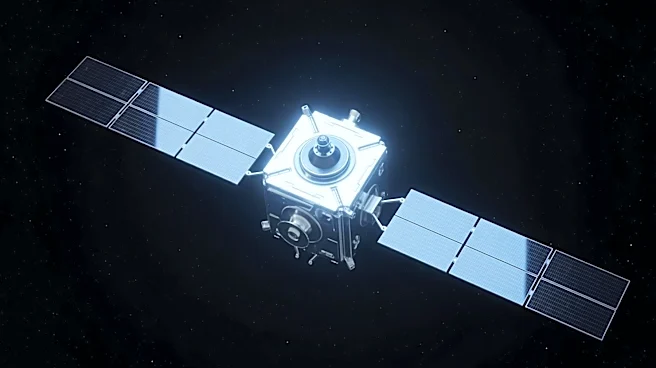
SpaceX is set to launch its Falcon Heavy rocket for the first time in 18 months, carrying the ViaSat-3 F3 communications satellite. The launch is scheduled from Kennedy Space Center, with a window opening at 10:21 a.m. EDT. The Falcon Heavy, known for its three
modified first-stage boosters, will generate approximately 5.1 million pounds of thrust. This mission marks the rocket's return since its last flight in October 2024. The ViaSat-3 F3 satellite, weighing 6.6 tons, will be placed in geostationary orbit to provide broadband services across the Asia-Pacific region. This launch completes the ViaSat-3 satellite constellation, enhancing global broadband connectivity.
Why It's Important?
The launch of the Falcon Heavy is significant for both SpaceX and the global communications industry. It demonstrates SpaceX's continued leadership in heavy-lift capabilities, crucial for deploying large satellites. The ViaSat-3 F3 satellite will enhance broadband services in the Asia-Pacific, a region with growing demand for high-speed internet. This development supports global connectivity and digital inclusion, potentially boosting economic activities and access to information. For SpaceX, successful launches reinforce its reputation and reliability, attracting more commercial and governmental clients.
What's Next?
Following the launch, the Falcon Heavy's side boosters are expected to return to Cape Canaveral, while the central core will be expended in the Atlantic Ocean. The satellite will be deployed into geosynchronous transfer orbit approximately five hours post-launch. The completion of the ViaSat-3 constellation will enable Viasat to expand its broadband services, potentially leading to new partnerships and market opportunities. SpaceX will continue to focus on its Starship development, aiming to further revolutionize space travel and satellite deployment.