



What's Happening?
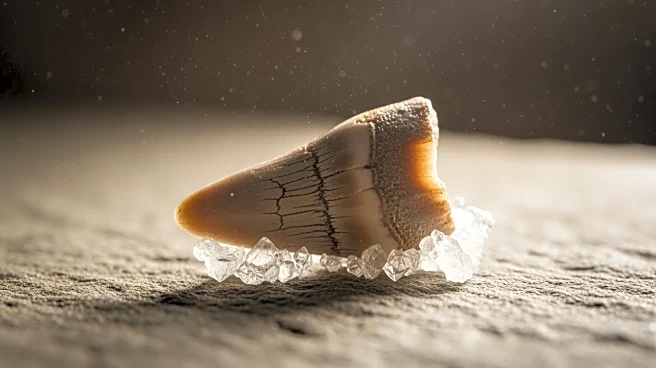
Researchers have successfully extracted the oldest known proteins from a fossilized rhinoceros tooth, dating back between 21 million and 24 million years. This discovery, made in Canada's high Arctic, sets a new record for protein preservation, surpassing
the previous record of 3.5 million years. The extreme cold of the Arctic environment played a crucial role in preserving these proteins. The study provides new insights into the rhinoceros family tree, revealing that two subfamilies diverged earlier than previously thought. This breakthrough suggests that scientists might be able to identify proteins from even older remains in the future, potentially extending the evolutionary record back to the time of the dinosaurs.
Why It's Important?
The extraction of such ancient proteins is significant as it opens new avenues for understanding evolutionary relationships between ancient and modern species. Proteins, which break down more slowly than DNA, can offer deeper insights into the genetics and ancestry of long-extinct species. This advancement could revolutionize the field of paleontology by providing a more detailed picture of the evolutionary history of various species. It also highlights the potential for future discoveries in cold environments, where protein preservation is more likely. This could lead to a better understanding of the evolutionary processes that have shaped the biodiversity we see today.