





What's Happening?
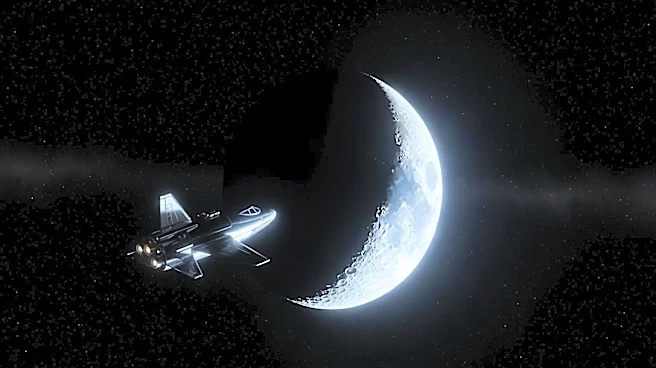
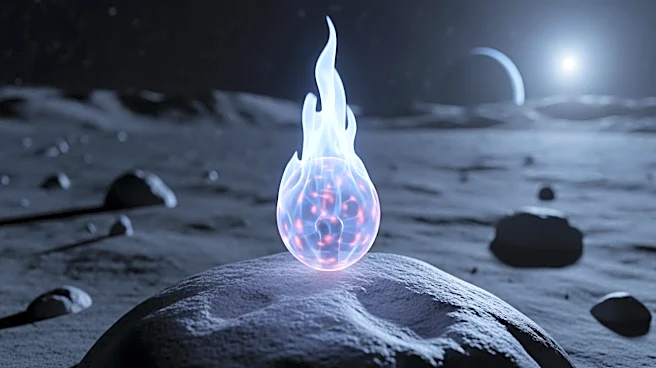
NASA is preparing to conduct the first fire experiment on the Moon, aiming to understand how flames behave in lunar gravity. This experiment, known as the Flammability Of Materials On The Moon (FM2), will involve igniting four solid fuel samples in controlled
environments on the lunar surface. The goal is to gather data on flame growth, spread, and extinction under partial gravity conditions, which differ significantly from Earth's gravity. Previous experiments in microgravity have shown that flames behave differently, often forming spherical shapes and burning at lower temperatures. These findings have challenged existing assumptions about combustion and fire suppression strategies. The FM2 experiment is scheduled for a potential launch in late 2026 and will be equipped with cameras, radiometers, and oxygen sensors to capture detailed data.
Why It's Important?
Understanding fire behavior in lunar gravity is crucial for the safety of future lunar missions, especially as plans for long-term human presence on the Moon progress. The experiment's findings could reshape safety standards for spacecraft, habitats, and astronaut equipment. Materials that are considered safe on Earth may behave differently in the Moon's reduced gravity, potentially posing new risks. The experiment will provide benchmark data to refine these safety standards, ensuring that future missions are designed with realistic fire behavior in mind. This research is a critical step toward sustainable human presence beyond Earth, as it will influence everything from construction materials to emergency protocols.
What's Next?
The FM2 experiment is expected to launch in late 2026, marking the first time such a test will be conducted beyond Earth orbit under sustained partial gravity conditions. The data collected will help close the gap in understanding how materials behave in lunar environments, potentially leading to new safety protocols and design standards for future lunar habitats. As agencies and private companies push toward building permanent bases on the Moon, the outcomes of this experiment could shape the design of future missions for decades.
Beyond the Headlines
The implications of this experiment extend beyond immediate safety concerns. It highlights the need to reassess well-established engineering standards when applied outside of Earth. The unique conditions of the Moon, including its reduced gravity and planned oxygen-rich atmospheres for future habitats, create a potentially hazardous environment that has never been fully studied in real-world conditions. Understanding fire in this new environment is not optional; it will influence the design and safety of humanity's first off-world homes.