


What's Happening?
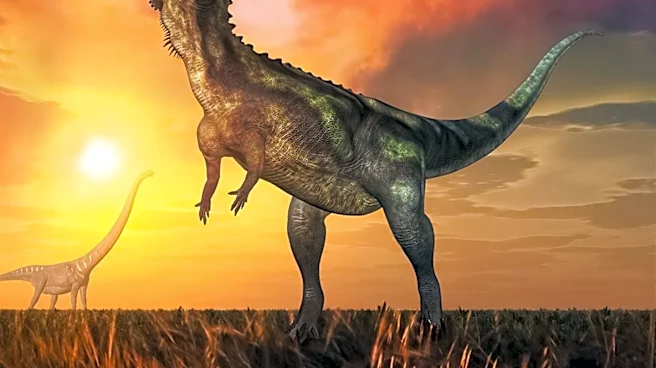
In Chaiyaphum, Thailand, over 100 dinosaur fossil fragments, estimated to be more than 130 million years old, have been discovered. This significant find was led by Sita Manitkoon from the Palaeontological Research and Education Centre at Mahasarakham
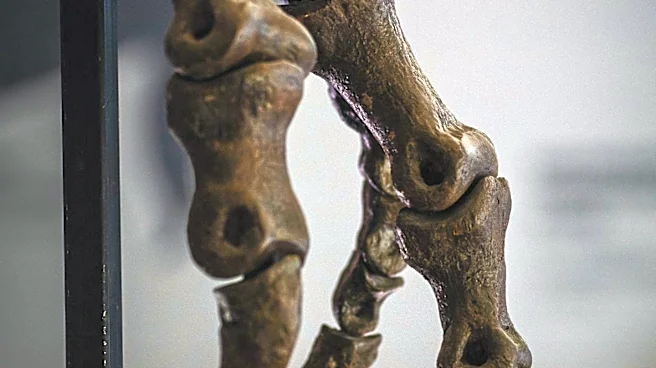
University. The fossils, believed to belong to a carnivorous dinosaur, were found in Ban Khwao district. This discovery marks the fourth dinosaur found in the region and potentially the oldest, surpassing the previously discovered Nagatitan chaiyaphumensis, a plant-eating dinosaur. The fossils include vertebrae, leg bones, and other skeletal parts, and are currently being analyzed to determine the exact classification of the dinosaur.
Why It's Important?
The discovery of these fossils is crucial for understanding the prehistoric ecosystem of Southeast Asia. It provides insights into the types of dinosaurs that roamed the area and their evolutionary history. The potential identification of a new carnivorous species could enhance scientific knowledge about dinosaur biodiversity and adaptation in ancient environments. Additionally, this find could boost local tourism and educational opportunities, as the site may become a recognized learning center and tourist attraction, contributing to the local economy.
What's Next?
Researchers plan to continue excavations and conduct further analysis to classify the dinosaur species accurately. The fossils will be transported to a research center for detailed study. Local leaders are hopeful that the site will gain international recognition, which could lead to increased funding and resources for further paleontological research in the area.