




What's Happening?
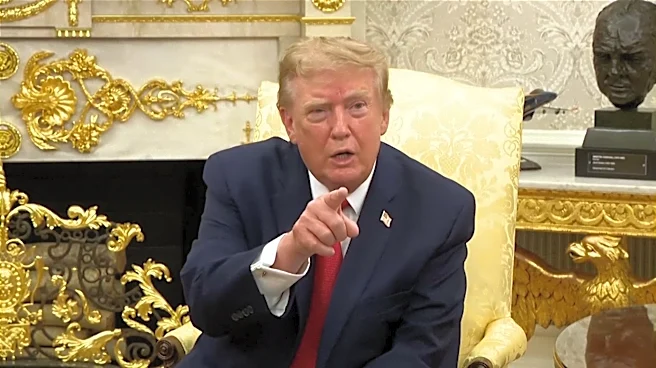
President Trump's net job approval rating is negative in 47 out of 50 U.S. states and the District of Columbia, according to a new YouGov/Economist projection. Only three states—Wyoming (+14), Idaho (+9), and West Virginia (+6)—show a majority approval for
the president. These three states consistently voted for President Trump in the 2016, 2020, and 2024 presidential elections. Conversely, the lowest net job approval rating is in Washington D.C. (-83), followed by Maryland and Vermont, both at -50. These areas are historically Democratic strongholds. This data aligns with President Trump's overall record-low approval numbers in nationwide polling, including a recent Reuters/Ipsos poll from August 17, which indicated that only one in three Americans approve of his job performance. This marks the lowest approval rating for President Trump since his return to the White House in 2025.
Why It's Important?
The widespread negative approval ratings for President Trump across most U.S. states highlight a significant challenge for his administration and the Republican party, particularly as the nation approaches pivotal midterm elections in November. Low approval numbers can impact legislative agendas, influence voter turnout, and affect the political capital of the president. The consistent disapproval in key states, even those that might be considered swing states, suggests a broad sentiment that could translate into electoral losses for his party. Furthermore, the Reuters/Ipsos poll indicating that 80% of Americans are concerned about a prolonged war with Iran, including a significant portion of Republicans, suggests that foreign policy issues are contributing to public dissatisfaction. This concern about international conflicts, coupled with domestic approval challenges, could undermine the administration's ability to garner public support for its policies and initiatives, both domestically and abroad.
What's Next?
As the midterm elections approach, President Trump and the Republican party will likely intensify efforts to address public concerns and improve approval ratings. This could involve a strategic focus on issues that resonate with the remaining states where he holds majority approval, such as Wyoming, Idaho, and West Virginia, while attempting to mitigate disapproval in other regions. The administration may also seek to reframe its foreign policy narrative, particularly concerning Iran, to alleviate public anxiety about prolonged conflict. However, given the consistent negative trends, a significant shift in public opinion would require substantial policy changes or a major re-evaluation of communication strategies. The upcoming elections will serve as a critical barometer for the long-term political implications of these approval ratings, potentially dictating the future direction of the administration's policies and the balance of power in Congress.
Beyond the Headlines
The persistent low approval ratings for President Trump, despite his return to office, suggest a deeper societal and political polarization within the United States. This trend indicates that a significant portion of the electorate remains unconvinced by his leadership, potentially reflecting ongoing debates about governance, policy effectiveness, and political rhetoric. The contrast between his strong support in a few states and overwhelming disapproval elsewhere underscores the fragmented nature of American political identity. This division could lead to continued legislative gridlock and heightened political tensions, making it challenging to achieve national consensus on critical issues. The long-term implications might include a re-evaluation of political strategies by both major parties, as they seek to understand and respond to an electorate that appears deeply divided and increasingly critical of established political figures.