





What's Happening?
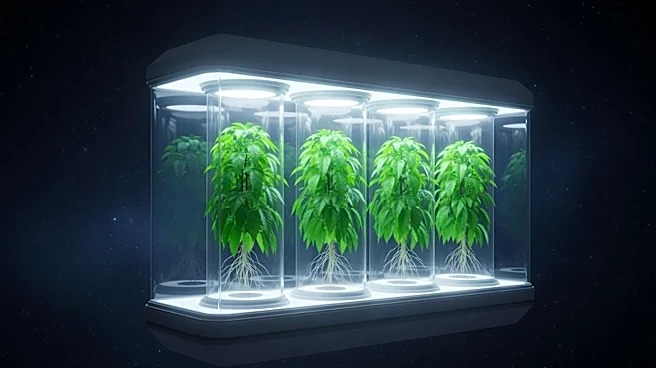
Researchers at the University of California, San Diego have developed a method for cultivating medicinal compounds from plants under space-like conditions. This innovative approach allows astronauts on long-duration missions to produce fresh batches of medicine
as needed, using plants as mini-factories. The method involves extracting therapeutic compounds from plants without damaging them, offering a cost-effective solution for drug production in resource-limited regions. The research focuses on the cowpea mosaic virus, known for its antitumor activity, and demonstrates the potential for plants to serve as a reliable source of medicine in space.
Why It's Important?
The ability to grow medicinal plants in space addresses a critical challenge in long-duration space travel: ensuring access to safe and effective medications. Traditional drug supplies degrade quickly in space, making plants a promising alternative for producing medications. This research not only enhances the sustainability of space missions but also offers potential applications for drug production in remote or resource-limited areas on Earth. By leveraging plant-based systems, the study paves the way for more resilient and self-sufficient space exploration, with implications for future missions to Mars and beyond.
What's Next?
The research team plans to test their method in actual space missions, collaborating with the Rocket Propulsion Laboratory to study the effects of rocket launches on plant seeds. They aim to further explore how space conditions impact plant processes, such as nutrient uptake, to optimize the cultivation of medicinal compounds. The ultimate goal is to establish a reliable system for producing medications in space, reducing dependency on Earth-based supplies and enhancing the autonomy of space missions.