




What's Happening?
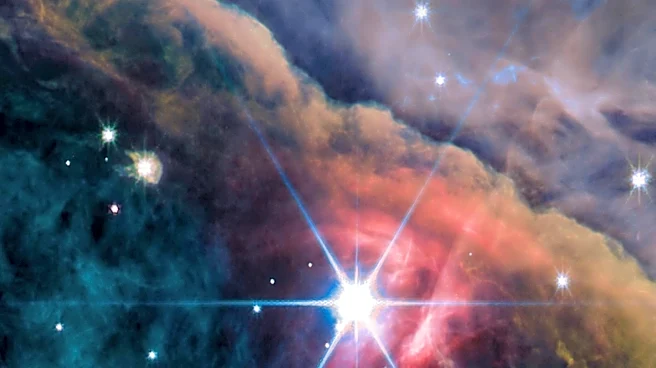
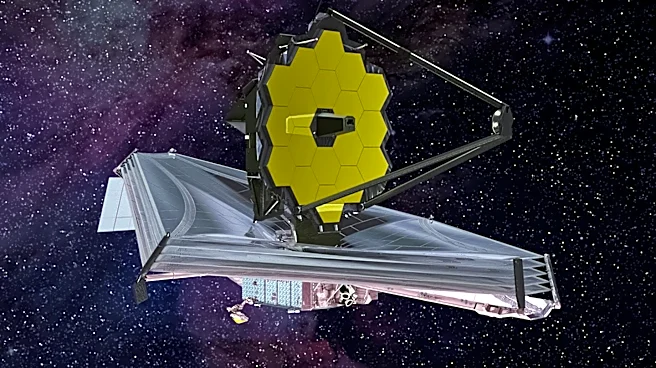
NASA's James Webb Space Telescope has provided new images of the galaxy Centaurus A, revealing its complex structure shaped by a past cosmic collision. The telescope's infrared capabilities have uncovered a densely packed field of stars and an active
galaxy center, previously obscured by dust. Centaurus A, located 11 million light-years from Earth, features a supermassive black hole at its core, which influences the galaxy's evolution. The galaxy's unusual structure is a result of a major collision with another galaxy two billion years ago, leading to ongoing star formation and dynamic changes.
Why It's Important?
The detailed observations of Centaurus A offer valuable insights into the interactions between galaxies and black holes. Understanding these processes is crucial for comprehending galaxy formation and evolution. The James Webb Space Telescope's ability to penetrate dust and reveal hidden structures marks a significant advancement in astronomical research. These findings contribute to our knowledge of cosmic history and the role of black holes in shaping galaxies. The research has implications for theoretical models of galaxy dynamics and the study of similar cosmic events in the universe.
What's Next?
Astronomers will continue to analyze the data from the James Webb Space Telescope to explore the complex interactions within Centaurus A. Future studies will focus on the galaxy's star formation history and the influence of its supermassive black hole. The telescope's capabilities will enable further exploration of other galaxies with similar characteristics, enhancing our understanding of cosmic collisions and their impact. The ongoing research will contribute to the development of more accurate models of galaxy evolution and the role of black holes in the universe.