





What's Happening?
Indigenous advocate and attorney Amy Bowers Cordalis, a member of the Yurok tribe, highlighted the successful removal of four dams on the Klamath River, marking the largest dam removal in American history and the world's largest salmon restoration project.
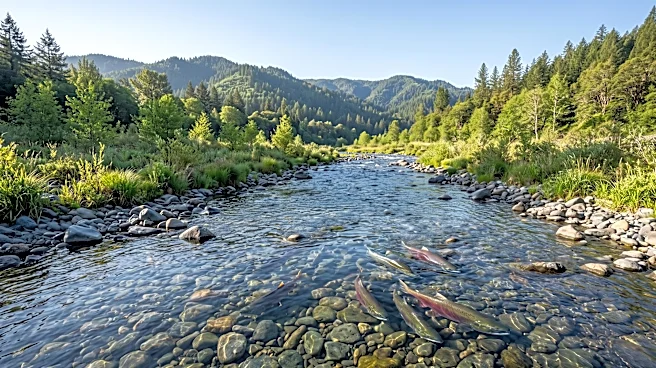
The Yurok tribe, whose ancestral home is along the Klamath River in Northern California, witnessed a severe decline in salmon runs and increased pollution due to a century of extraction and dam construction. Cordalis recounted the tribe's long fight, which involved forming coalitions with indigenous nations, commercial fishermen, NGOs, states, and farmers, as well as extensive litigation. This collective effort led to a $500 million settlement agreement for dam removal, which equally valued the rights of nature, business, and indigenous peoples. The removal of the dams in 2023 and 2024 has resulted in a remarkably rapid recovery of the river, with salmon returning to historical spawning grounds not accessed for a century. The project has also created living-wage jobs for tribal members and non-members, focusing on restoring land and planting billions of native seeds, which are bringing back plants, animals, and foods essential to indigenous cultures.
Why It's Important?
The Klamath River dam removal project is a significant case study demonstrating that environmental restoration can be economically viable and mutually beneficial for diverse stakeholders. Cordalis emphasized that the dam removal was ultimately a better and cheaper deal for the power company and its ratepayers than installing fish ladders, which would have been required to continue operating the dams. This challenges the traditional binary view of business versus environment, suggesting that integrated solutions can lead to superior outcomes for all parties. The project underscores the critical role of indigenous rights and traditional knowledge in environmental progress, advocating for their recognition not as obstacles but as essential components of sustainable solutions. The restoration efforts are not only revitalizing the ecosystem but also supporting the cultural and economic well-being of indigenous communities, providing jobs and reconnecting them with their ancestral lands and traditions. The project's success offers a hopeful model for addressing complex environmental challenges and fostering balance between human activities and the natural world.
What's Next?
The restoration efforts on the Klamath River are ongoing and are expected to continue through 2028. This includes further land restoration, continued planting of native seeds, and monitoring the ecological recovery of the river and its salmon populations. The project's success is anticipated to inspire similar initiatives, particularly in regions facing environmental degradation due to outdated infrastructure. Stakeholders, including environmental groups, indigenous communities, and policymakers, will likely study the Klamath model to inform future dam removal and river restoration projects across the U.S. The continued recovery of the salmon runs is expected to further strengthen the cultural practices and economic opportunities for the Yurok tribe and other indigenous peoples along the river. The project also serves as a powerful example for advocating for policies that prioritize ecosystem restoration and integrate indigenous perspectives into environmental decision-making.
Beyond the Headlines
The Klamath River project highlights a profound shift in environmental philosophy, moving beyond the monetization of nature to valuing it through restoration and respect. Cordalis argued against putting a price tag on natural resources like salmon, asserting that such an approach can justify environmental destruction. Instead, the project champions the idea of finding common interests and mutually beneficial solutions that prioritize ecological health. This approach resonates with indigenous wisdom, which emphasizes living in balance with the natural world and recognizing the interconnectedness of all life. The project's success also underscores the resilience of nature and the potential for rapid healing when given the opportunity. It challenges the prevailing sense of hopelessness regarding climate and environmental issues, offering a tangible example that healing nature is possible. The integration of traditional ecological knowledge with modern science and legal strategies provides a powerful framework for addressing environmental crises, suggesting that a deeper connection to ancestral wisdom can guide contemporary efforts toward sustainability and balance.