





What's Happening?
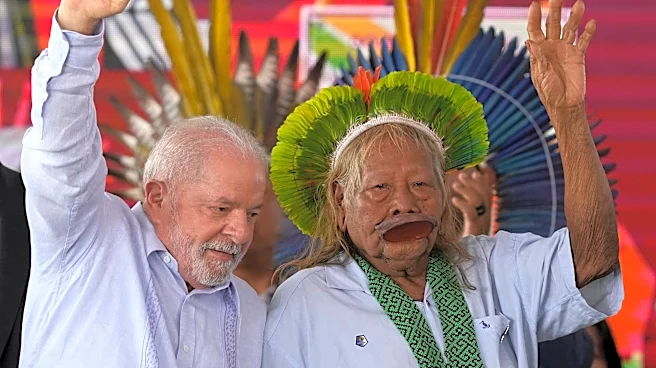
Indigenous people from across Brazil have gathered in the capital, Brasilia, for the annual Free Land Encampment rally. This event, known locally as 'Acampamento Terra Livre,' is Brazil's largest annual Indigenous mobilization, focusing on land rights
and environmental protection. The rally is a platform for Indigenous communities to demand that the government fulfill longstanding promises, such as the demarcation of Indigenous territories. During the event, protesters set fire to skull sculptures representing lawmakers as a form of protest against Congress. The rally also included marches and participation in Supreme Court sessions, where justices discussed cases impacting Indigenous lands, such as the potential reduction of Jamanxim National Park. The event highlights the ongoing struggle of Indigenous communities in Brazil to secure their land rights and protect their environment.
Why It's Important?
The Free Land Encampment rally underscores the critical issues of land rights and environmental protection faced by Indigenous communities in Brazil. These communities are often on the front lines of environmental conservation, and their lands are crucial for biodiversity. The rally draws attention to the government's unfulfilled promises regarding land demarcation, which is essential for the protection of Indigenous territories from deforestation and exploitation. The event also highlights the broader global issue of Indigenous rights and environmental justice, as these communities play a vital role in preserving ecosystems that are under threat from industrial activities. The outcome of the rally and the government's response could have significant implications for environmental policies and Indigenous rights in Brazil.
What's Next?
Following the rally, the Brazilian government may face increased pressure to address the demands of Indigenous communities. The discussions in the Supreme Court regarding the reduction of Jamanxim National Park's size could set a precedent for future cases involving Indigenous lands. If the government takes steps to demarcate Indigenous territories, it could lead to stronger protections for these areas and potentially reduce conflicts over land use. However, if the government fails to act, it may lead to further protests and international scrutiny. The ongoing dialogue between Indigenous leaders and government officials will be crucial in determining the future of land rights and environmental protection in Brazil.
Beyond the Headlines
The Free Land Encampment rally also highlights the cultural significance of land for Indigenous communities. For many Indigenous peoples, land is not just a resource but a vital part of their identity and heritage. The rally serves as a reminder of the cultural and spiritual connections that Indigenous communities have with their land, which are often overlooked in policy discussions. Additionally, the event brings attention to the role of Indigenous knowledge in environmental conservation, as these communities have long practiced sustainable land management. Recognizing and integrating Indigenous perspectives into environmental policies could lead to more effective conservation strategies.