



What's Happening?
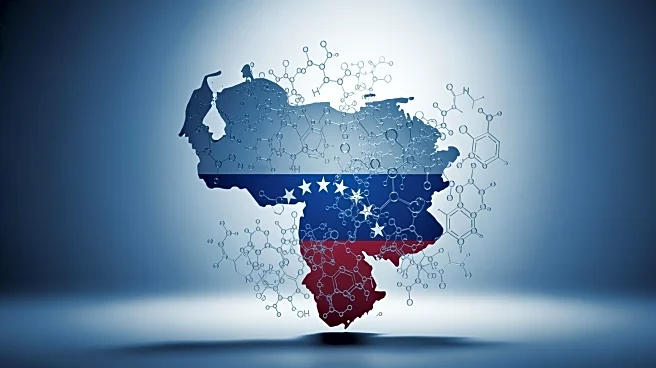
President Trump recently led a successful operation to capture Venezuelan dictator Nicolás Maduro, which has been interpreted by some as a move to address the fentanyl crisis. However, experts argue that the operation was more about oil than fentanyl.
The real center of fentanyl production is in northern Mexico, particularly in the Sinaloa Cartel's stronghold, not Venezuela. The fentanyl crisis, which claimed nearly 75,000 American lives in 2022, is described as a mass poisoning rather than a typical drug epidemic. The focus should be on Mexico, where the Sinaloa Cartel operates with a complex network akin to a Fortune 500 company.
Why It's Important?
The misinterpretation of the Venezuela operation as a solution to the fentanyl crisis highlights a critical misalignment in U.S. drug policy. The real threat lies in Mexico, where the Sinaloa Cartel continues to operate despite the capture of major kingpins. This misunderstanding could divert resources and attention away from effective strategies that target the cartel's supply chains and financial networks. The fentanyl crisis remains urgent, with significant implications for public health and safety in the U.S. A strategic focus on dismantling the cartel's operations could lead to a substantial reduction in fentanyl-related deaths.
What's Next?
The Trump administration has an opportunity to build on past successes by employing a counter-network strategy similar to those used against terrorist organizations. This involves mapping the Sinaloa Cartel's operations and targeting its digital infrastructure, finances, and communications. Additionally, addressing the flow of U.S.-made weapons to the cartel and confronting Chinese chemical companies supplying fentanyl precursors are crucial steps. These actions could significantly disrupt the cartel's operations and reduce the flow of fentanyl into the U.S.
Beyond the Headlines
The fentanyl crisis underscores the need for a comprehensive approach that goes beyond traditional law enforcement tactics. It requires international cooperation, particularly with Mexico and China, to address the root causes of the crisis. The ethical implications of the crisis, which affects communities across the U.S., call for honest and transparent policy discussions. The focus should be on saving lives and preventing future tragedies by addressing the systemic issues that allow the fentanyl trade to thrive.