



What's Happening?
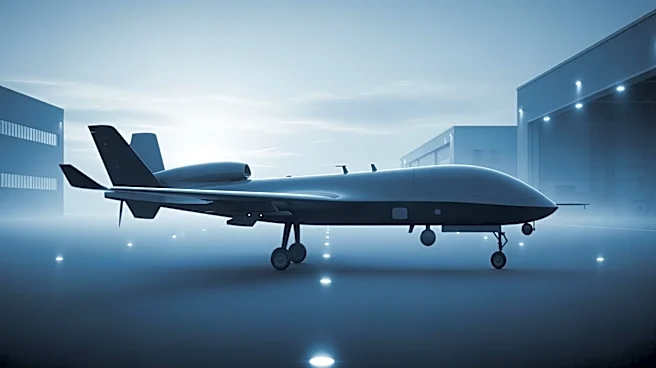
Boeing Australia and Rheinmetall have announced a partnership to offer the MQ-28 Ghost Bat Collaborative Combat Aircraft (CCA) to Germany. This move comes as the Bundeswehr, Germany's armed forces, seeks to procure CCAs by 2029 to enhance its combat capabilities.
The MQ-28 Ghost Bat is competing against other systems, including the XQ-58A Valkyrie and the CA-1 Europa, for acquisition. The MQ-28 has already conducted around 150 flights, primarily through Operational Test and Evaluation for the Royal Australian Air Force, its launch customer. Rheinmetall will manage the system integration with Bundeswehr command and weapon systems, providing maintenance and logistics support. The partnership aims to establish a dedicated digital environment in Germany for testing new software and hardware.
Why It's Important?
The partnership between Boeing and Rheinmetall to offer the MQ-28 Ghost Bat to Germany is significant as it represents a strategic move to modernize Germany's military capabilities. With the Tornado fleet set to retire by 2030, the Bundeswehr is looking to increase its combat mass through advanced unmanned systems. The MQ-28's ability to perform reconnaissance, electronic warfare, and strike missions in a manned-unmanned teaming arrangement could enhance Germany's defense posture. This collaboration also highlights the growing importance of unmanned systems in modern warfare, potentially influencing other nations to adopt similar technologies. Rheinmetall's involvement underscores the economic potential of defense partnerships, with expected revenue in the range of hundreds of millions of euros.
What's Next?
As the Bundeswehr evaluates its options for CCAs, the MQ-28 Ghost Bat will continue to compete against other systems for acquisition. The partnership will focus on integrating the MQ-28 with Germany's existing military infrastructure, ensuring compatibility with command and weapon systems. Engineers from Germany and Australia will collaborate in a digital environment to test and refine the aircraft's software and hardware. The outcome of this procurement process could set a precedent for future defense collaborations and influence the development of unmanned systems globally. Stakeholders, including political leaders and defense contractors, will closely monitor the progress and implications of this partnership.
Beyond the Headlines
The partnership between Boeing and Rheinmetall to offer the MQ-28 Ghost Bat to Germany reflects broader trends in military modernization and international defense collaboration. As countries seek to enhance their military capabilities, the integration of unmanned systems becomes increasingly crucial. This development may prompt ethical and legal discussions regarding the use of autonomous systems in warfare, including concerns about accountability and decision-making in combat scenarios. Additionally, the partnership could influence geopolitical dynamics, as nations reassess their defense strategies in response to emerging threats and technological advancements.