







What's Happening?
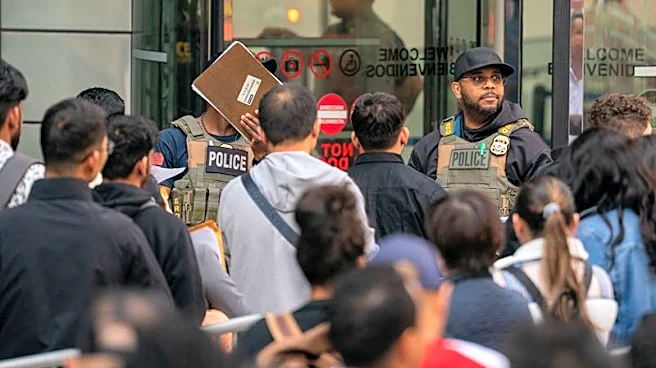
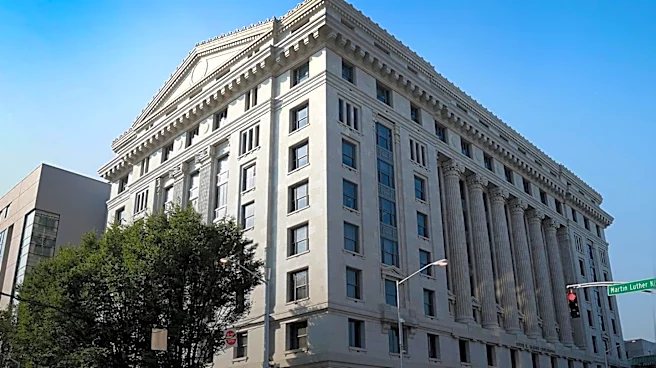
A federal judge has issued a ruling that bars the federal government from conducting immigration arrests at U.S. courthouses. This decision marks a significant setback for a policy implemented during President Trump's administration, which allowed for such
arrests. U.S. District Judge Casey Pitts of San Francisco criticized the policy for lacking proper decision-making and failing to consider the 'chilling effect' on individuals attending court hearings. The ruling follows a similar decision in New York, but this latest judgment applies nationwide. The policy had been criticized for leading to arrests in courthouse hallways, often coordinated with the Department of Homeland Security. The judge emphasized the need for federal agencies to provide sound reasons for their actions, as required by the Administrative Procedure Act.
Why It's Important?
This ruling is significant as it challenges a key aspect of the Trump administration's immigration enforcement strategy. By prohibiting arrests at courthouses, the decision aims to ensure that individuals can attend court proceedings without fear of detention, which could improve access to justice for immigrants. The ruling may also influence how immigration policies are enforced across the country, potentially leading to changes in how federal agencies operate. Critics of the policy argue that it undermines the judicial process and deters individuals from participating in legal proceedings. The decision could have broader implications for immigration policy and enforcement practices in the U.S.
What's Next?
The ruling may prompt the federal government to appeal the decision, potentially leading to further legal battles over the policy. If upheld, the decision could require federal agencies to revise their enforcement strategies and develop new guidelines for handling immigration cases. The ruling may also encourage other states to challenge similar policies, leading to a broader reevaluation of immigration enforcement practices. Stakeholders, including immigrant advocacy groups and legal organizations, are likely to monitor the situation closely and may push for additional reforms to protect the rights of immigrants in the judicial system.