
What's Happening?
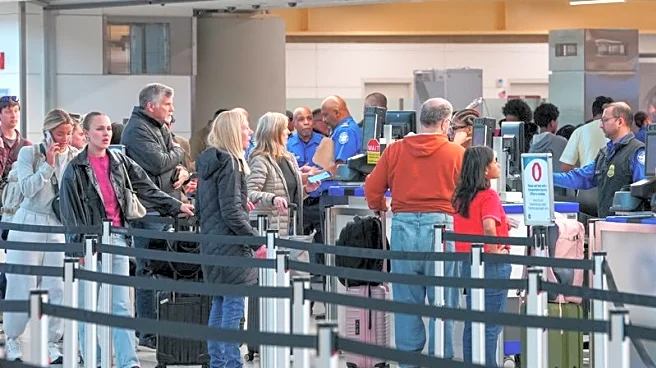
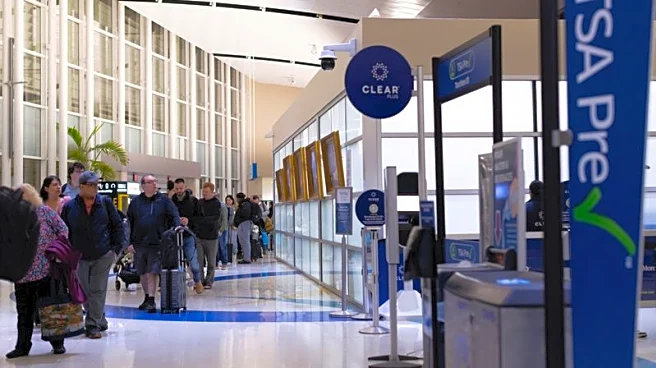
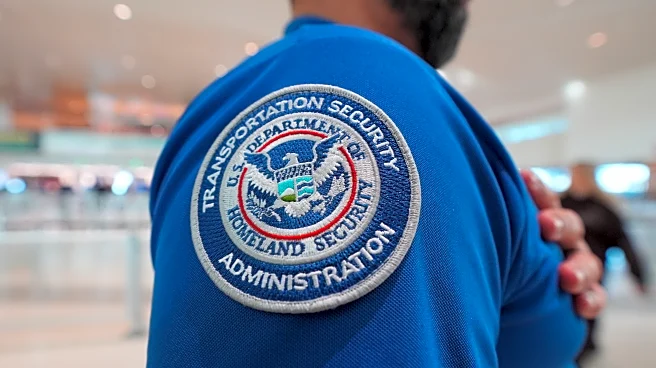
Travelers across the United States are experiencing significant delays due to a partial government shutdown affecting TSA operations. Heather Johnson, a traveler from Chicago, faced long security lines and opted to purchase a CLEAR pass to expedite her family's
journey to Washington, D.C. TSA agents are working without pay, leading to increased absenteeism and longer wait times at airports nationwide. Chris Sununu, former governor of New Hampshire and current president of Airlines for America, has called for an end to the shutdown, urging Congress to fund the Department of Homeland Security to alleviate the situation. Sununu highlighted the challenges faced by TSA officers, many of whom are struggling financially and seeking alternative employment to make ends meet.
Why It's Important?
The ongoing delays at airports due to the partial government shutdown have significant implications for the airline industry and travelers. With TSA agents working without pay, the risk of security lapses increases, potentially affecting national security. The situation also places financial strain on TSA employees, leading to workforce shortages and operational challenges. The airline industry, represented by Sununu, is pushing for legislative action to ensure TSA agents are compensated, emphasizing the need for stability in aviation operations. The delays coincide with peak travel periods, including spring break and upcoming events like the FIFA World Cup, highlighting the urgency for resolution to prevent further disruptions.
What's Next?
Efforts to resolve the shutdown are underway, with Sununu and other industry leaders advocating for bipartisan support of bills like the Aviation Funding Stability Act. These measures aim to ensure TSA agents and other aviation personnel are paid during government shutdowns. Sununu has expressed optimism about recent discussions in Congress, although a swift resolution remains uncertain. The airline industry is preparing for increased travel demands, emphasizing the need for reliable security operations. Stakeholders are hopeful that legislative action will prevent future shutdowns from impacting aviation security and operations.