






What's Happening?
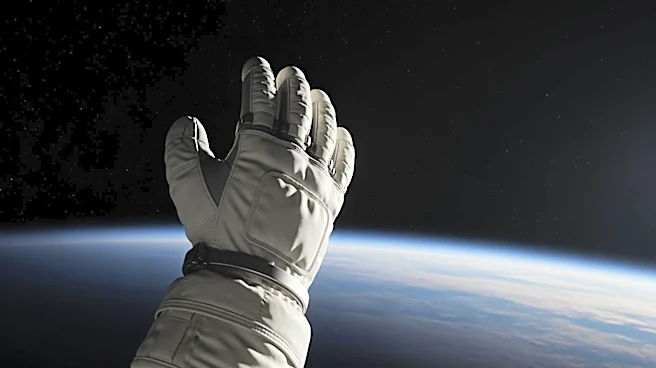
NASA revisits the challenges faced during the Gemini IX-A mission's spacewalk, conducted by astronaut Eugene Cernan on June 5, 1966. This mission marked the second American spacewalk, following the first by Edward H. White. Cernan encountered significant
difficulties due to the rigidity of his spacesuit, which made movement strenuous and led to exhaustion. His helmet fogged up, and his heart rate soared, prompting NASA to cut the spacewalk short. The mission's challenges prompted NASA to reassess and improve spacewalk training, equipment, and procedures, laying the groundwork for future lunar missions.
Why It's Important?
The Gemini IX-A mission's challenges were pivotal in shaping NASA's approach to extravehicular activities (EVAs). The lessons learned from Cernan's experience led to significant advancements in spacesuit design and astronaut training, ensuring better safety and efficiency in future missions. These improvements were crucial for the success of subsequent lunar missions, highlighting the importance of adapting and evolving space exploration techniques based on past experiences. The mission underscores the iterative nature of space exploration, where each mission builds on the lessons of its predecessors.