




What's Happening?
The United Nations High Commissioner for Refugees (UNHCR) has voiced significant concern regarding the severe funding shortfalls affecting refugees and asylum seekers in Malawi. According to Helen Mebrahtu, UNHCR Multi-Country Office Representative a.i.
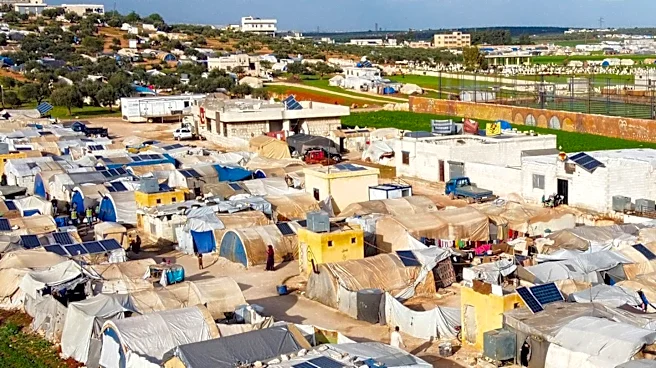
for Malawi, Zambia, and Zimbabwe, the humanitarian and protection needs of these populations have not decreased, but the available resources to meet them have. This financial strain is forcing difficult decisions, particularly as many refugee families continue to face substantial needs. The World Food Programme (WFP) has already begun prioritizing food assistance for the most vulnerable refugees in Malawi due to these funding challenges and a growing refugee population. WFP plans to provide monthly cash assistance to 35,000 of the most vulnerable refugees in Dzaleka camp, covering 50 percent of their food needs, a reduction from the previous 75 percent assistance provided since 2022. The Dzaleka refugee camp currently hosts over 65,000 refugees.
Why It's Important?
The funding crisis in Malawi highlights a broader global challenge in humanitarian aid, where resource limitations directly impact the lives of vulnerable populations. For the U.S., this situation underscores the importance of international humanitarian contributions and the potential for increased refugee flows if conditions in host countries deteriorate. The reduction in food assistance and the difficult choices faced by organizations like UNHCR and WFP can lead to heightened food insecurity, malnutrition, and protection risks among refugees. This could destabilize regions and potentially create further humanitarian crises, requiring more extensive international intervention. The U.S., as a major donor to humanitarian efforts, has a vested interest in the stability and well-being of refugee populations globally, as these situations can have ripple effects on international relations and security. The call for greater support and opportunities for refugees to become self-reliant also aligns with long-term development goals that the U.S. often champions.
What's Next?
UNHCR, in collaboration with the Government of Malawi and WFP, will continue to monitor the impact of these funding constraints and the transition to prioritized assistance. They plan to respond to emerging protection risks and advocate for increased support and stronger opportunities for refugees to achieve self-reliance and socio-economic inclusion. WFP urgently requires USD 7.2 million to restore full rations for the 35,000 most vulnerable refugees through April 2027, which is seen as a critical first step towards assisting everyone again. The Government of Malawi remains committed to providing protection and refuge, working with partners to manage the situation responsibly while ensuring protection, dignity, and humanitarian principles are central to the response. Efforts will also focus on strengthening complaints and feedback mechanisms, protection referrals, and monitoring for both assisted and non-assisted households.
Beyond the Headlines
The situation in Malawi reflects a systemic issue within global humanitarian aid: the increasing gap between humanitarian needs and available funding. This forces aid organizations to make difficult ethical decisions about who receives assistance and who does not, often leading to a prioritization of the most vulnerable at the expense of others still in need. The long-term implications include potential social unrest within refugee camps, increased health crises due to malnutrition, and a greater reliance on informal economies, which can expose refugees to exploitation. Furthermore, the emphasis on self-reliance and socio-economic inclusion, while crucial, requires significant investment and policy changes that are often challenging to implement amidst funding shortfalls. This scenario also raises questions about the equitable distribution of responsibility among nations for supporting displaced populations, highlighting the need for more sustainable and predictable funding mechanisms for humanitarian crises worldwide.