


What's Happening?
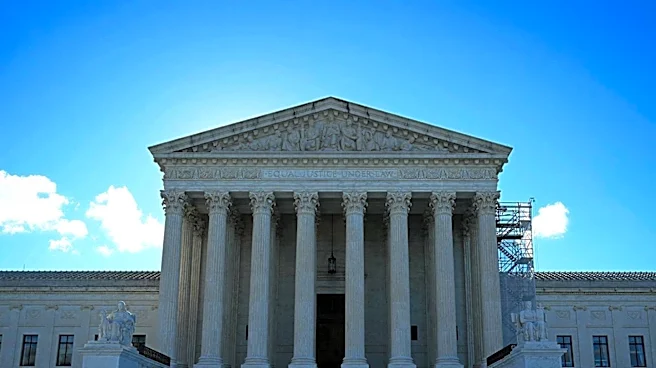
The Supreme Court of the United States, often referred to as 'Scotus,' serves as the final arbiter of constitutional interpretation. The Court's structure includes one Chief Justice and eight Associate Justices, who are appointed for life to ensure independence
from political pressures. The Court's primary function is to interpret the law, with its most significant power being judicial review, allowing it to declare laws and executive actions unconstitutional. The process for a case to reach the Supreme Court involves a rigorous selection process, focusing on cases with substantial legal questions or national importance.
Why It's Important?
The Supreme Court plays a crucial role in shaping U.S. law and society, with its decisions impacting civil rights, political processes, and the balance of power among government branches. Its rulings can redefine legal standards and influence public policy, making the Court a pivotal institution in American democracy. Understanding its function and impact is essential for comprehending how legal and constitutional issues are resolved in the U.S.
Beyond the Headlines
The Court's decisions often reflect broader societal changes and can lead to significant shifts in legal interpretations over time. The appointment of justices can alter the Court's ideological balance, affecting its rulings for decades. The Court's role in interpreting the Constitution involves navigating complex social and technological landscapes, highlighting the dynamic nature of constitutional law.