







What's Happening?
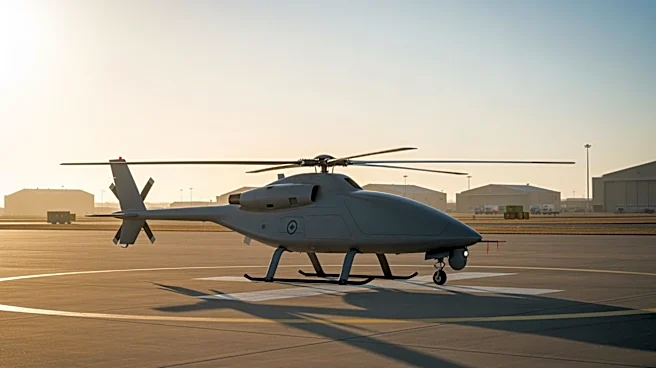
Sikorsky, a Lockheed Martin company, has secured a $15.5 million contract from the United States Marine Corps for the Medium Aerial Resupply Vehicle – Expeditionary Logistics (MARV-EL) Increment 2 program. This initiative involves the development of the R66
TURBINETRUCK, an autonomous cargo helicopter created in collaboration with Robinson Unmanned. The R66 TURBINETRUCK integrates Sikorsky’s MATRIX autonomy system with the R66 airframe from Robinson Helicopter Company, aiming to provide a versatile and cost-effective solution for combat sustainment. The MARV-EL program addresses a gap between small tactical drones and large strategic airlifters by offering a 'middleweight' uncrewed logistics platform capable of operating from various challenging environments. The platform is designed to deliver essential supplies such as ammunition and medical equipment, especially in scenarios where traditional ground or crewed aviation assets are unavailable.
Why It's Important?
The development of the R66 TURBINETRUCK under the MARV-EL program represents a significant advancement in military logistics, particularly in enhancing the U.S. Marine Corps' operational capabilities. By providing a reliable and autonomous logistics solution, the program aims to reduce personnel exposure to high-risk environments, thereby increasing safety and efficiency. The integration of MATRIX autonomy allows for flexible and rapid deployment, which is crucial in dynamic combat situations. This development not only strengthens the U.S. military's logistical operations but also sets a precedent for future autonomous systems in both military and civilian applications. The collaboration between Sikorsky and Robinson Unmanned highlights the growing trend of integrating advanced technology into traditional aerospace platforms, potentially leading to broader adoption across various sectors.
What's Next?
Robinson Unmanned is set to deliver the first R66 TURBINETRUCK to Sikorsky for integration, testing, evaluation, and demonstration. These demonstrations will showcase the MATRIX system's capabilities, emphasizing its platform-agnostic and open architecture design. The success of these demonstrations could lead to further contracts and the expansion of autonomous logistics solutions within the military. Additionally, the program's outcomes may influence future defense procurement strategies, encouraging more investments in autonomous technologies. Stakeholders, including military leaders and defense contractors, will likely monitor the program's progress closely to assess its impact on operational readiness and strategic capabilities.