


What's Happening?
A top official from the U.S. Fish and Wildlife Service informed Idaho lawmakers that the Trump administration intends to immediately pursue the removal of grizzly bears from the endangered species list once a proposed rule is finalized. This proposed rule,
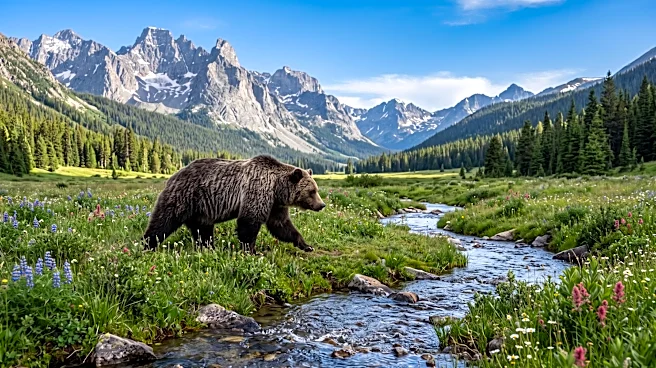
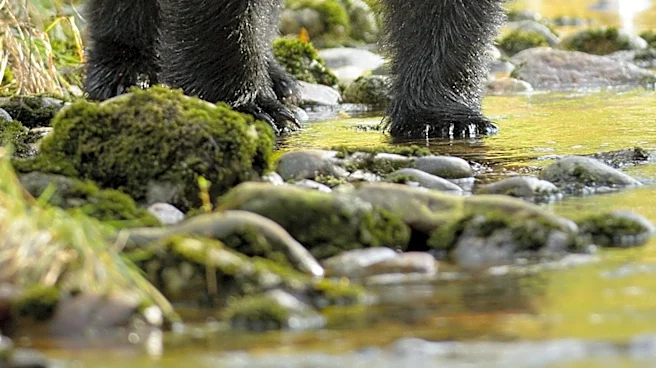
announced in July by Governor Brad Little and Interior Secretary Doug Burgum, aims to grant states greater authority in managing endangered grizzly bears. Karen Budd-Falen, a Fish and Wildlife deputy director, stated that the proposed rule would not alter the bears' current protection status but would instead empower states like Idaho, Montana, and Wyoming to implement their own recovery plans. Grizzly bears have been listed as endangered since 1975, receiving broad protections against hunting and habitat development after their populations were severely depleted by settlers. The proposed rule is also intended to serve as a safeguard in case any delisting efforts face legal challenges, ensuring states retain governing positions over the bears' management.
Why It's Important?
The potential delisting of grizzly bears from the Endangered Species Act carries significant implications for wildlife conservation and state-federal relations in the U.S. If successful, it would shift management responsibilities from federal oversight to individual states, which could lead to varied approaches in conservation strategies. For states like Idaho, Montana, and Wyoming, this means greater control over how grizzly populations are managed, including interactions with livestock and humans. While some states, particularly Montana and Wyoming, have seen more pronounced grizzly bear recovery with nearly 2,000 bears across the northern Rocky Mountains and Yellowstone, Idaho's population is estimated at a lower 120 in the Panhandle. The move could also set a precedent for other endangered species, potentially altering the balance of power in wildlife management across the nation and sparking debates over the effectiveness of state-led conservation efforts versus federal protections.
What's Next?
Following the finalization of the proposed rule, the Trump administration is expected to promptly initiate efforts to delist grizzly bears. This action will likely trigger legal challenges from environmental groups and conservation advocates who may argue against the premature removal of federal protections. The U.S. Fish and Wildlife Service anticipates these legal battles, with the proposed rule designed to act as a 'safety net' to ensure states maintain management authority even if delisting is unsuccessful in court. The focus will then shift to Idaho, Montana, and Wyoming, as they develop and implement their respective recovery plans for the grizzly bear populations within their borders. The effectiveness and impact of these state-led plans will be closely monitored, particularly in Idaho, where grizzly populations are less numerous compared to other states.
Beyond the Headlines
This move transcends simple wildlife management, touching upon deeper philosophical and political debates regarding federal versus state control over natural resources and endangered species. The concept of 'states' rights' in environmental policy is a recurring theme, and this decision could empower states to pursue more localized, and potentially less stringent, conservation measures. It also highlights the ongoing tension between economic development interests, which often view endangered species protections as impediments, and conservation efforts aimed at preserving biodiversity. The long-term ecological impact of such a shift in management, particularly for a species like the grizzly bear that requires large, interconnected habitats, will be a critical area of observation. The outcome could influence future decisions on other species currently under federal protection, potentially reshaping the landscape of U.S. environmental policy for decades to come.