



What's Happening?
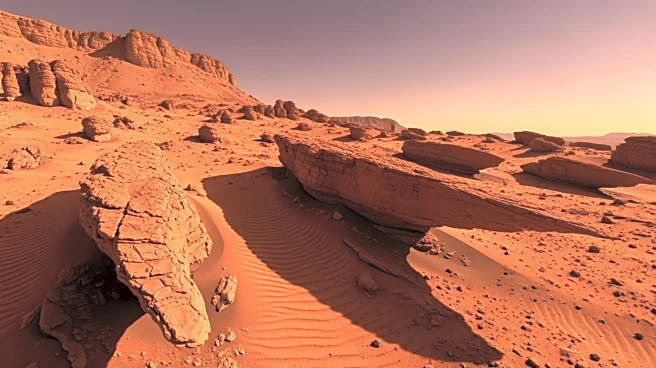
The European Space Agency's Mars Express orbiter recently captured images of yardangs, wind-sculpted ridges, near the Eumenides Dorsum mountain on Mars. These formations, created by strong, consistent winds, provide insight into the planet's active geological
processes. The yardangs, which span an area nearly the size of Belgium, are evidence of sustained wind erosion that has shaped the Martian landscape over time. The orbiter's High Resolution Stereo Camera (HRSC) has been instrumental in mapping Mars in color and 3D, allowing scientists to study the planet's surface and atmospheric conditions.
Why It's Important?
The discovery of yardangs on Mars highlights the dynamic nature of the planet's surface and atmosphere. Understanding these formations helps scientists gain insights into Martian climate patterns and wind dynamics, which are crucial for future exploration missions. The data collected by the Mars Express orbiter contributes to refining atmospheric models and understanding how dust and sand are transported across the planet. This knowledge is essential for planning human missions to Mars, as it informs landing site selection and habitat construction to withstand Martian weather conditions.