







What's Happening?
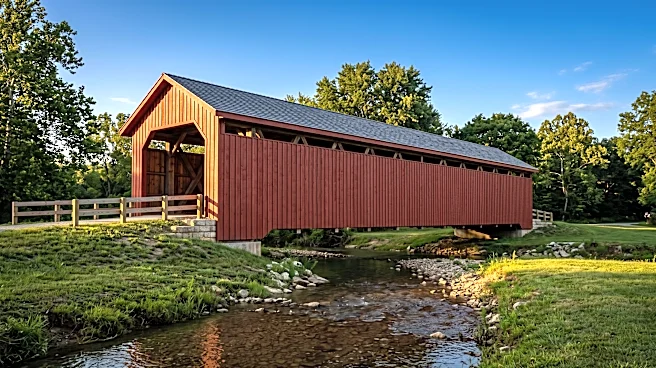
Parke County, Indiana, has officially opened its 32nd covered bridge, the Depot Bridge in Rockville, just before the annual Covered Bridge Festival. The project, which was a decade-long vision, involved significant community effort, with local residents
donating wood, time, and labor. Mark Davis, the project manager, noted the collaborative spirit that brought the vision to fruition. Engineer Jim Barker studied historical construction methods to ensure the new bridge matched original designs from generations past, describing these wooden bridges as functional art. The construction team emphasized that the project was a collective effort, requiring many individuals to work together. The opening ceremony marks a new landmark for the county, ready to be enjoyed by the community and visitors during the upcoming festival.
Why It's Important?
The opening of Parke County's 32nd covered bridge is significant for several reasons, particularly for local tourism and community identity in the U.S. The county is renowned for its covered bridges, which are a major draw for the annual Covered Bridge Festival, attracting visitors and boosting the local economy. This new bridge not only adds to the county's unique architectural heritage but also reinforces its status as a premier destination for historical and scenic tourism. The project's reliance on community donations of materials and labor highlights the strong civic engagement and pride within Parke County. This collaborative effort can serve as a model for other communities looking to preserve or enhance their local heritage through collective action. Economically, the bridge is expected to further enhance the festival's appeal, bringing more tourists and revenue to local businesses, while culturally, it strengthens the county's distinctive identity tied to these historic structures.
What's Next?
Following the opening of the Depot Bridge, the immediate focus will be on its role in the upcoming Covered Bridge Festival, where it is expected to be a central attraction. The community will likely continue to celebrate this new landmark, and local tourism boards will integrate it into promotional materials for future events. Long-term, the bridge will require ongoing maintenance and preservation efforts to ensure its longevity, similar to the other historic covered bridges in the county. This may involve continued community involvement or dedicated funding from local government and historical societies. The success of this community-driven project could also inspire further initiatives to restore or build similar structures, reinforcing Parke County's unique appeal. The bridge's opening also sets a precedent for how historical engineering and community collaboration can successfully bring ambitious projects to completion.
Beyond the Headlines
The construction and opening of the Depot Bridge in Parke County extend beyond a simple infrastructure project; it represents a profound connection to American heritage and craftsmanship. The engineer's dedication to studying 150-year-old building techniques underscores a respect for traditional skills and a desire to maintain historical authenticity in modern construction. This project challenges the notion that progress always means abandoning the past, instead demonstrating how historical methods can be integrated with contemporary community efforts. Ethically, the reliance on donated wood and labor speaks to a communal spirit and a shared investment in public goods, fostering a sense of ownership and pride among residents. Culturally, covered bridges evoke a nostalgic image of a bygone era, and adding a new one helps to keep this part of American folklore alive, offering a tangible link to the past for future generations. It highlights the enduring value of preserving unique regional identities in an increasingly globalized world.