







What's Happening?
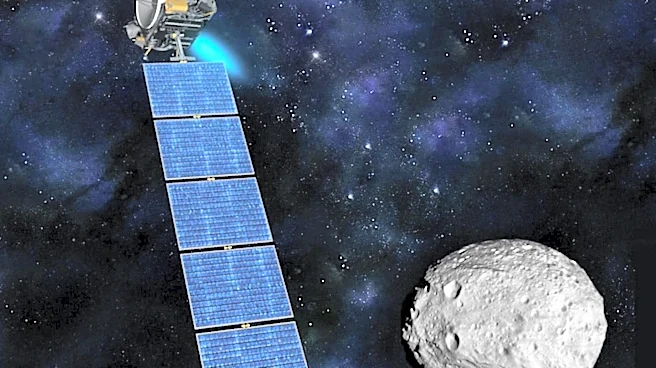
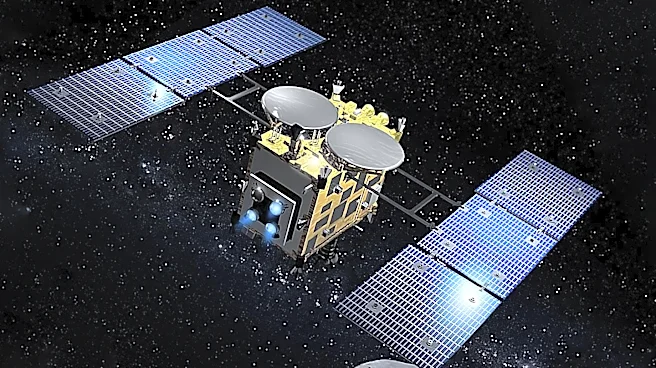
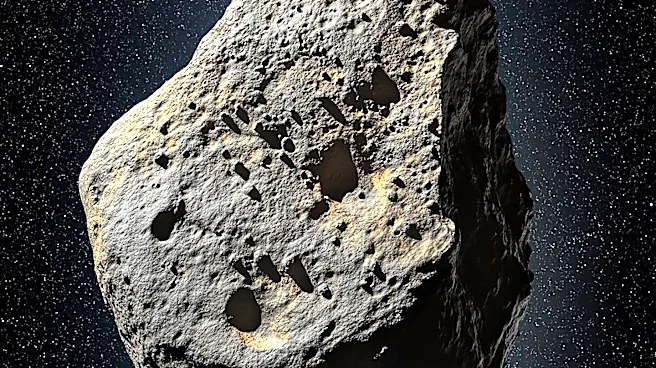
China's Tianwen-2 spacecraft has successfully arrived at the near-Earth asteroid 469219 Kamo'oalewa, marking the start of its close-up science campaign. The mission, which began over a year ago, aims to return a sample from the asteroid, which is believed
to be a quasi-moon of Earth. The spacecraft has already provided new insights into the asteroid's size and composition, challenging previous theories about its origin. Tianwen-2's mission is part of a decade-long expedition that will also target a comet-like body in the main asteroid belt.
Why It's Important?
The Tianwen-2 mission represents a significant advancement in China's space exploration capabilities, particularly in asteroid research. By studying Kamo'oalewa, scientists hope to gain insights into the early solar system's formation and evolution. The mission's success could enhance our understanding of near-Earth objects and their potential impact on Earth. Additionally, the data collected may inform future space missions and contribute to planetary defense strategies. The mission also highlights China's growing presence in space exploration, positioning it as a key player in international space research.
What's Next?
Tianwen-2 is expected to leave Kamo'oalewa in April 2027, with a sample capsule returning to Earth in November of the same year. The spacecraft will then continue its journey to 311P/PanSTARRS, a main-belt comet, making it the first mission to visit both a near-Earth asteroid and a main-belt comet. The samples returned will be analyzed to determine the asteroid's origin, potentially resolving the debate over whether it is a piece of the Moon or an asteroid. The mission's findings could have significant implications for our understanding of the solar system.