







What's Happening?
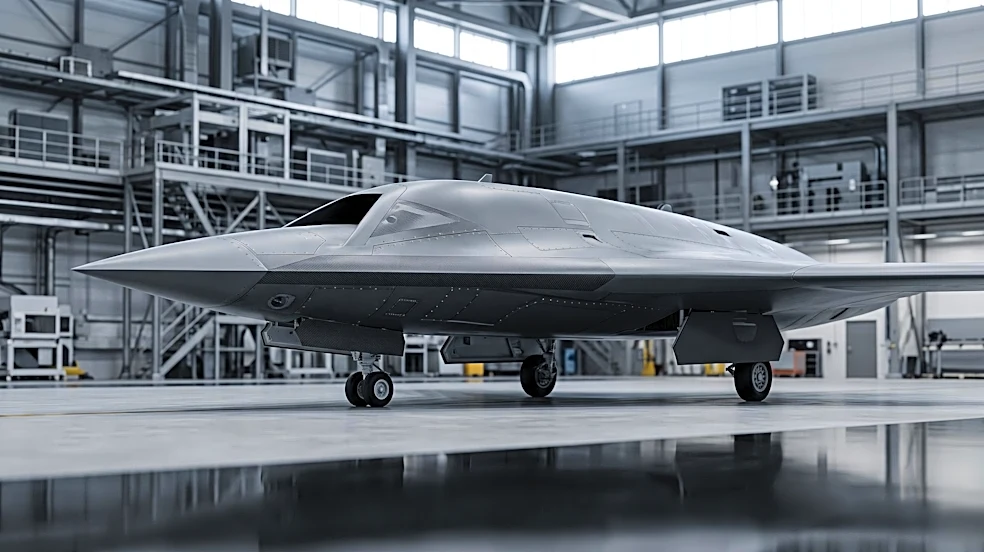
Germany's Ministry of Defence has informed Boeing of its decision to not directly procure the MQ-28 Ghost Bat drone wingman. This move signifies a reevaluation of Germany's approach to acquiring Collaborative Combat Aircraft (CCA). The initial target
for fielding a CCA was 2029, which would have made Germany the first European nation to achieve this milestone. However, Berlin now intends to push this target into the early 2030s, with flight tests projected to begin in 2027. This reversal also casts doubt on a March 2026 partnership where Defence Minister Boris Pistorius had considered the Ghost Bat for the Luftwaffe, and Rheinmetall had signed on as the aircraft's German systems integrator. The German Ministry of Defence has declined to comment on potential procurement projects, citing procurement and public contracting law, and the requirement for parliamentary approval.
Why It's Important?
This decision by Germany highlights the fragmented and unsettled nature of Europe's approach to loyal-wingman drones. The delay in Germany's CCA program, despite having one of Europe's best-resourced defense budgets, suggests that challenges lie not only in technology but also in contracting structures and industrial policy. For the U.S. defense industry, specifically Boeing, this represents an unexpected delay in securing a significant foothold in the European market for its MQ-28 Ghost Bat. The opening created by Germany's pullback intensifies competition among other defense contractors, including German start-up Helsing, Airbus (partnered with Kratos), and General Atomics, all vying to supply CCA platforms to European nations. This could lead to a more diverse and potentially less standardized European CCA landscape, impacting future interoperability within NATO.
What's Next?
The delay in Germany's CCA program means that flight tests, now slated for 2027, will offer Boeing and other competitors a renewed opportunity to secure the eventual acquisition. Rivals like Helsing, Airbus, and General Atomics are expected to intensify their efforts to pitch their respective CCA platforms to Berlin. The broader implications for NATO include potential challenges in achieving shared training, logistics, and data standards if allies adopt different and incompatible platforms. The German Ministry of Defence's adherence to parliamentary approval processes indicates that future decisions will involve legislative scrutiny, potentially leading to further delays or changes in direction. For Boeing and Rheinmetall, the immediate next step will likely involve re-strategizing their approach to the European CCA market.
Beyond the Headlines
The German decision underscores the complex interplay between national defense priorities, industrial policy, and international collaboration in advanced military technology. The initial ambition to be the first European nation to field a CCA by 2029 reflected a desire for technological leadership and enhanced defense capabilities. The subsequent delay and reevaluation suggest a deeper consideration of strategic fit, cost-effectiveness, and the long-term implications of such procurements. This situation could also influence other European nations' decisions regarding their own CCA programs, potentially leading to a more cautious or collaborative approach across the continent. The emphasis on 'contracting structures and industrial policy' points to the significant economic and political dimensions intertwined with defense acquisitions, extending beyond mere technological capabilities.