





What's Happening?
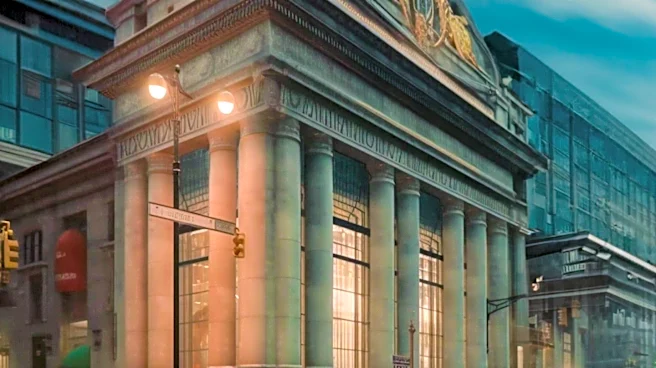
President Donald Trump's administration has decided to halt a long-planned expansion project for Washington's Union Station, which was approved under the Biden administration. The original $8.8 billion plan included a new train hall, expanded tracks and platforms,
and a new bus terminal, aiming to significantly increase passenger capacity. Instead, the Department of Transportation, led by Secretary Sean Duffy, is setting aside $24 million to develop a new vision for the station through a public-private partnership. This move is part of President Trump's broader plan to enhance the infrastructure of Washington, D.C., making it more beautiful and safe. The new direction aims to ensure long-term profitability and improve the passenger experience, though details of the replacement plan, including costs and capacity, remain unclear.
Why It's Important?
The decision to scrap the approved expansion plan for Union Station has significant implications for infrastructure development in Washington, D.C. The original plan was designed to accommodate future growth in rail travel, which is crucial for a city that serves as a major transportation hub. By shifting to a public-private partnership model, the administration aims to leverage private investment to achieve these goals. However, this approach raises questions about the project's future scope and effectiveness in meeting the city's transportation needs. The change in direction could impact local businesses, commuters, and the broader economic landscape of the region, as Union Station is a key component of the city's infrastructure.
What's Next?
The next steps involve developing a new plan for Union Station that aligns with the Trump administration's vision. This will likely involve negotiations with private partners to outline the project's scope, funding, and timeline. Stakeholders, including local government officials and community groups, may seek to influence the new plan to ensure it meets the city's needs. The administration will need to address concerns about maintaining the station's historical significance while modernizing its facilities. The outcome of these efforts will determine the future of one of Washington, D.C.'s most important transportation hubs.