




What's Happening?
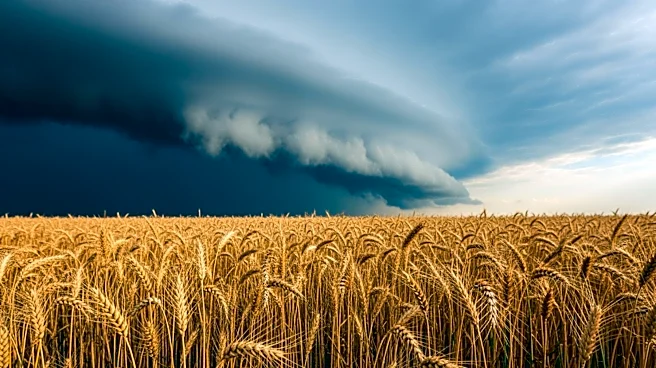
A recent study published in Nature Climate Change highlights a significant shift in hail risk toward major farming regions as the climate warms. The research, led by Dr. Tim Raupach from the UNSW Institute of Climate Risk and Response, indicates that
atmospheric conditions conducive to hail formation are moving from warmer to cooler regions, including parts of northern North America, south-eastern Australia, New Zealand, and Europe. This shift is occurring during winter and shoulder seasons, which coincides with the growing periods of many crops. The study utilized proxies to model atmospheric conditions associated with hail, revealing an increased risk in cooler areas and times of the year. The findings suggest that while warmer atmospheres can fuel stronger updrafts leading to larger hailstones, the melting altitude for ice also rises, potentially reducing the number of hailstones reaching the ground.
Why It's Important?
The shift in hail risk poses a significant threat to agriculture, particularly for winter crops. As traditional growing regions become hotter and drier due to global warming, agriculture is expected to move poleward into cooler areas. However, these regions are also experiencing increased hail risk, which could offset the benefits of new agricultural zones. For farmers, insurers, and policymakers, this presents a challenge in planning and adapting to climate change. Hailstorms can destroy crops in minutes, and the increased risk during critical growing periods could lead to substantial economic losses. The study underscores the need for greater attention to hail as a climate hazard, which has historically received less focus compared to droughts and heatwaves.
What's Next?
The study's findings call for a reevaluation of agricultural strategies and policies to address the growing hail risk. Farmers may need to consider crop insurance and other risk mitigation strategies to protect against potential losses. Policymakers could focus on developing adaptive measures to support farmers in regions with increasing hail risk. Additionally, further research is needed to refine hail risk projections and improve understanding of regional impacts. As the climate continues to change, ongoing monitoring and adaptation will be crucial to safeguarding agricultural productivity and food security.
Beyond the Headlines
The study highlights the complex interplay between climate change and agricultural viability. As regions gain agricultural potential due to warming, they also face new challenges such as increased hail risk. This dynamic underscores the importance of integrated climate and agricultural policies that consider multiple hazards. The findings also raise questions about the sustainability of current agricultural practices and the need for innovation in crop management and protection. As the global climate continues to evolve, understanding and addressing these multifaceted challenges will be essential for ensuring long-term food security.