








What's Happening?
Senator John Fetterman, a Pennsylvania Democrat, announced on Thursday that he is ceasing his critical campaign against Hasan Piker, a prominent progressive streamer. Fetterman has been vocal in his disapproval of Piker, particularly regarding comments
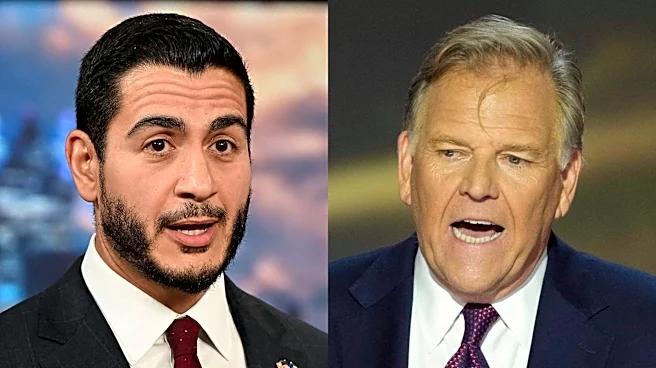
made by Piker, such as his assertion that the U.S. is a worse terrorist group than al-Qaeda. Piker's continued relevance on Capitol Hill is largely due to his association with Michigan Senate hopeful Abdul El-Sayed, who is seeking a Senate seat. Despite El-Sayed distancing himself from Piker's controversial remarks, he has not severed ties with the streamer. Fetterman expressed that he feels he 'lost' to Piker, stating he cannot compete with the influence Piker holds, especially given that some Democrats are campaigning with and defending him. Polling data from Harvard University and The Harris Poll indicates that nearly three-quarters of Democratic voters believe the party should reject such extreme stances.
Why It's Important?
This development highlights a significant internal struggle within the Democratic Party regarding its ideological boundaries and the influence of progressive figures. Senator Fetterman's decision to withdraw his criticism of Hasan Piker, despite his strong disagreement with Piker's views, underscores the challenges mainstream Democrats face in confronting or disavowing elements of their progressive base. The continued association of Senate hopeful Abdul El-Sayed with Piker, even after Piker's controversial statements, suggests a strategic calculation to maintain support from Piker's millions of followers. This situation could impact the Democratic Party's broader appeal, as polling indicates a majority of Democratic voters dislike extreme views. The dynamic also provides fodder for Republican opponents, such as Mike Rogers, who are using Piker's statements to portray El-Sayed and, by extension, the Democratic Party, as aligned with far-left extremism, potentially influencing the Michigan Senate race and future elections.
What's Next?
The immediate future will likely see continued scrutiny of Abdul El-Sayed's relationship with Hasan Piker, particularly as the Michigan Senate race progresses. Republican candidates are expected to continue leveraging Piker's controversial statements to challenge El-Sayed's political standing and to paint the Democratic Party as out of touch with mainstream American values. Senator Fetterman's withdrawal from actively criticizing Piker might lead to a perception of tacit acceptance or an inability to effectively counter such progressive voices within the party. This could further embolden progressive figures and potentially shift the Democratic Party's platform. The ongoing debate over the party's ideological direction will likely intensify, with implications for candidate endorsements, campaign strategies, and voter turnout in upcoming elections. The outcome of the Michigan Senate race could serve as a bellwether for how the Democratic Party navigates these internal divisions.
Beyond the Headlines
This situation delves into the evolving landscape of political influence, where social media streamers and online personalities can wield significant power within established political parties. Hasan Piker's ability to remain relevant and associated with a Senate hopeful, despite highly controversial statements, illustrates a shift in how political capital is accumulated and maintained. It raises questions about the Democratic Party's internal mechanisms for addressing and potentially disavowing extreme views within its ranks, especially when those views are popular among a segment of its base. The ethical dimension of associating with individuals who make statements like comparing the U.S. to a terrorist group also comes into play, challenging the moral compass of political campaigns. This dynamic could lead to a long-term re-evaluation of how political parties engage with and manage their diverse coalitions, potentially leading to more fractured or ideologically inconsistent political messaging in the future.