







What's Happening?
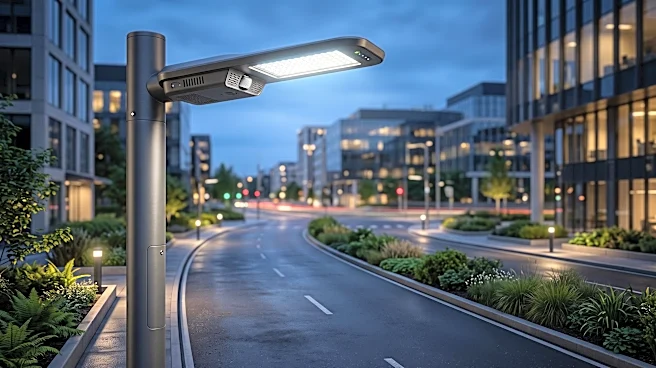
Smart street lighting systems are transforming how cities, municipalities, businesses, and communities manage outdoor illumination. These advanced systems integrate LED technology with intelligent controls and communication networks, allowing for more
efficient monitoring and management compared to traditional lighting. Unlike fixed-schedule lighting, smart systems enable dynamic adjustments to light levels based on factors such as time of day, traffic conditions, activity, or motion. Remote monitoring capabilities further enhance operational efficiency by allowing operators to identify and address system issues without the need for manual inspection of every light. This approach aims to optimize energy consumption and streamline maintenance requirements, providing a flexible and responsive lighting infrastructure.
Why It's Important?
The adoption of smart street lighting is crucial for U.S. cities and communities looking to modernize infrastructure and achieve sustainability goals. By offering significant energy savings through efficient LED technology and adaptive controls, these systems can reduce operational costs for municipalities and businesses. The ability to adjust lighting based on real-time conditions can also enhance public safety and security, as well as improve the aesthetic appeal of urban spaces. Furthermore, the integration of remote monitoring and automation reduces labor costs associated with maintenance and troubleshooting, allowing for more proactive and efficient management of lighting networks. This shift represents a move towards smarter, more connected urban environments, impacting public services and resource allocation.
What's Next?
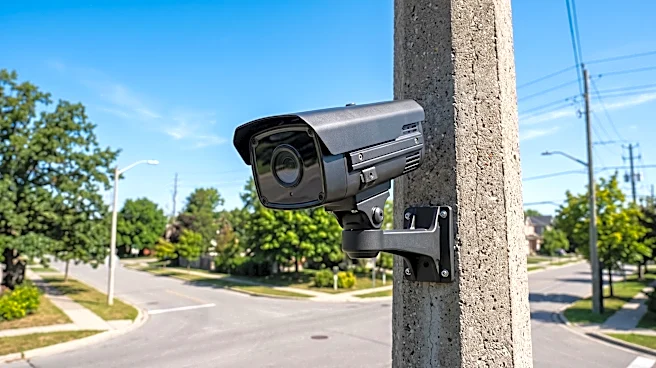
The future of outdoor lighting in the U.S. is expected to see continued advancements in connectivity and automation. Cities and businesses will likely further integrate smart street lighting into broader smart city initiatives, leveraging existing lighting infrastructure as a platform for other connected technologies. This could include combining lighting with security cameras, environmental sensors, and communication technologies to create comprehensive smart infrastructure networks. The focus will be on developing systems that provide optimal illumination while offering greater control and data insights to operators. As technology evolves, more sophisticated features like predictive maintenance and enhanced data analytics are anticipated to become standard, further improving efficiency and responsiveness.
Beyond the Headlines
The widespread implementation of smart street lighting carries deeper implications beyond immediate energy and cost savings. Ethically, these systems can contribute to enhanced public safety by providing better visibility and potentially integrating with emergency response systems. Culturally, well-lit public spaces can foster a greater sense of community and encourage outdoor activities, transforming urban experiences. Legally, the data collected by smart lighting systems, especially those integrated with cameras and sensors, raises questions about privacy and data governance, necessitating clear policies and regulations. Long-term, these systems are foundational to the development of truly intelligent cities, where interconnected infrastructure can dynamically respond to urban needs, influencing everything from traffic management to environmental monitoring.