










What's Happening?
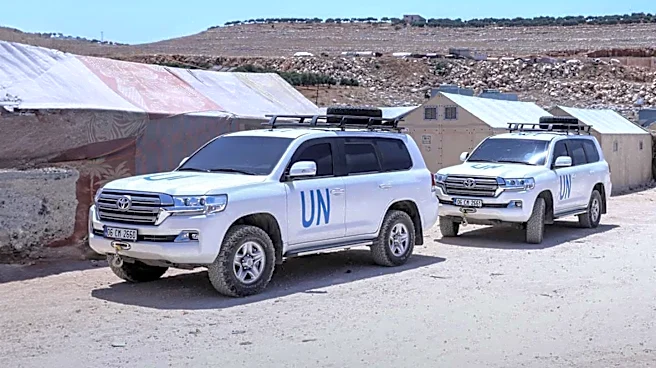
The Coordinator of Government Activities in the Territories (COGAT) has reported that the Gaza Strip received more than triple the amount of food aid required by the United Nations during a recent ceasefire. Between October 2025 and June 2026, approximately
1.78 million tons of food entered Gaza, significantly exceeding the UN's requirements. COGAT also noted a substantial drop in food prices in Gaza, attributed to the increased supply. Additionally, the report highlighted improvements in water supply and healthcare, with over 18,000 tons of medical supplies delivered and hospital capacity increased by 55%. COGAT Chief Major-General Yoram Halevy stated that the report aims to counter claims by Hamas and others about the humanitarian situation in Gaza.
Why It's Important?
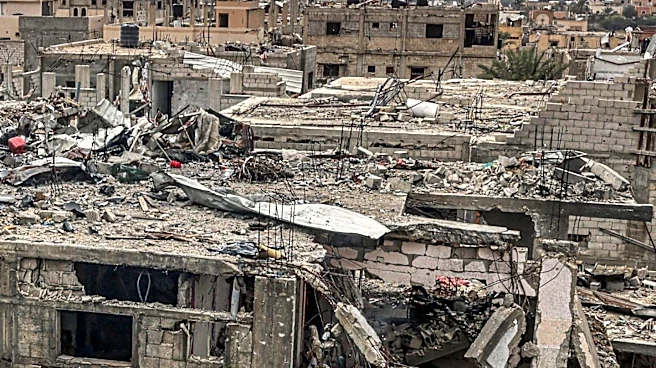
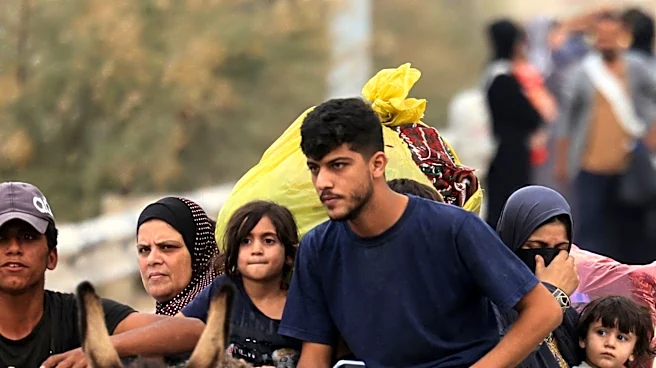
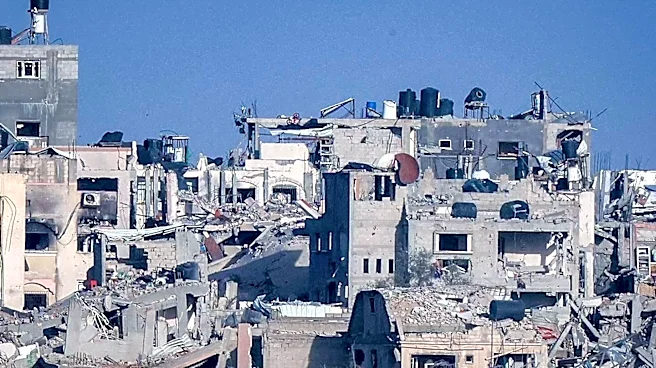
This report from COGAT is significant as it challenges narratives about the humanitarian conditions in Gaza, which are often used in international discourse. The findings suggest that the humanitarian aid provided during the ceasefire was more than sufficient, potentially impacting international perceptions and policy decisions regarding aid to Gaza. The report also highlights the complexities of aid distribution in conflict zones, where political and military dynamics can influence humanitarian efforts. The data provided by COGAT may influence future discussions on aid allocation and the role of international organizations in conflict areas.