








What's Happening?
Kristina Shin, an assistant professor of design at the University of Cincinnati's College of Design, Architecture, Art & Planning (DAAP), is leading research into the development of ergonomic compression garments for women with breast cancer-related lymphedema.
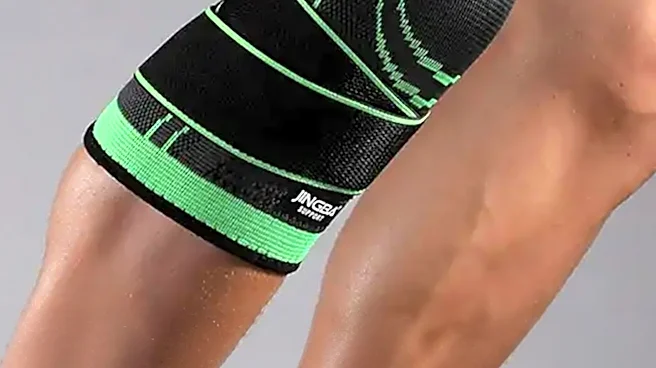
This condition, which can cause swelling in the arms and surrounding areas, often follows breast cancer treatment. Shin's work focuses on creating garments that address not only therapeutic needs but also practical aspects such as fit, comfort, mobility, pressure distribution, ease of dressing, and appearance. Her interest in medical garment design began when she realized the difficulties breast cancer patients faced in finding comfortable, appropriate, and affordable post-mastectomy products. As an associate research member of the University of Cincinnati Cancer Center, Shin collaborates with clinicians and researchers, combining her expertise in intimate apparel and garment construction with medical knowledge to improve patients' daily experiences.
Why It's Important?
This initiative is important because it highlights a significant gap in the medical apparel market, where functional needs often overshadow patient comfort and aesthetic preferences. By integrating fashion design principles with medical requirements, Shin's research aims to enhance the quality of life for breast cancer patients, particularly those managing lymphedema. The current market often provides therapeutic products that are uncomfortable or ill-fitting, leading to reduced compliance and emotional distress for patients. This interdisciplinary approach, combining design expertise with clinical knowledge, could set a new standard for medical garment development, ensuring that patients receive products that are both effective and supportive of their overall well-being and confidence. It also underscores the value of patient-centered design in healthcare, moving beyond purely clinical efficacy to consider the holistic experience of individuals living with chronic conditions.
What's Next?
The ongoing research by Kristina Shin and her collaborators will likely continue to involve understanding women's experiences with existing compression garments to inform future designs. The focus will remain on developing prototypes that meet specific ergonomic and aesthetic criteria. Future steps may include clinical trials to assess the effectiveness and patient satisfaction of these newly designed garments. The collaboration between design and medical professionals is expected to foster further innovations in medical apparel, potentially leading to broader applications for other patient populations. The success of this project could also encourage more academic institutions and industry partners to invest in patient-focused design for medical devices and garments, ultimately improving the daily lives of many individuals undergoing medical treatments.
Beyond the Headlines
Beyond the immediate benefits for breast cancer patients, this research has broader implications for the intersection of fashion, healthcare, and technology. It challenges the traditional view of medical garments as purely utilitarian, advocating for a design philosophy that prioritizes human dignity and psychological well-being alongside physical health. This approach could lead to a paradigm shift in how medical products are conceived and developed, fostering a more empathetic and holistic healthcare system. Furthermore, the project highlights the potential for interdisciplinary collaboration to solve complex problems, demonstrating how expertise from seemingly disparate fields like fashion design and oncology can converge to create meaningful advancements. It also raises ethical considerations about accessibility and affordability, ensuring that such innovative and comfortable solutions are available to all patients who need them, regardless of socioeconomic status.