






What's Happening?
ASML's CEO Christophe Fouquet has expressed concerns over the European Commission's approach to its technology sovereignty agenda. While supporting the overall goal of strengthening Europe's technological independence, Fouquet cautioned against the Commission's involvement
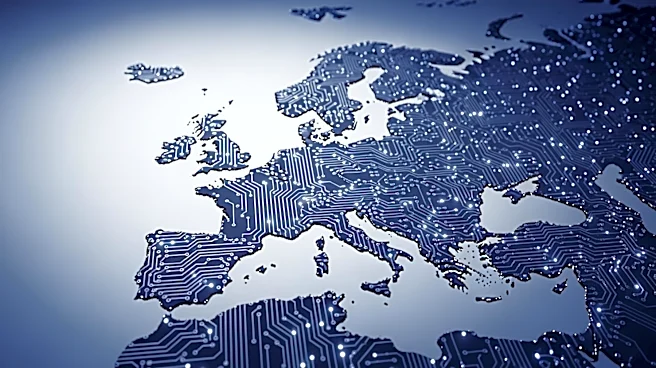
in steering strategic projects eligible for state aid. ASML, a leading supplier of advanced lithography equipment, plays a crucial role in semiconductor manufacturing. The Commission's technology sovereignty package, introduced on June 3, aims to reduce Europe's reliance on foreign suppliers for critical technologies, including semiconductors and AI systems. Fouquet's comments highlight a tension between the need for strategic direction and the risk of bureaucratic control slowing down projects.
Why It's Important?
The debate over the EU's technology sovereignty strategy is significant as it impacts Europe's ability to compete globally, particularly against the U.S. and China. ASML's position underscores the challenge of balancing public oversight with industry-led initiatives. The outcome of this debate could influence Europe's industrial policy, affecting investment, innovation, and the region's technological leadership. The EU's approach will determine whether it can effectively reduce dependencies on non-European providers and foster a competitive tech industry within its borders.
What's Next?
As the EU's legislative process unfolds, the Commission will need to address industry concerns about centralized control. The success of the technology sovereignty package will depend on finding a balance between public direction and private sector execution. This includes setting clear strategic goals, reducing fragmentation among member states, and ensuring that public procurement creates demand for European technologies. The ongoing dialogue between the Commission and industry leaders like ASML will be crucial in shaping the future of Europe's tech landscape.