






What's Happening?
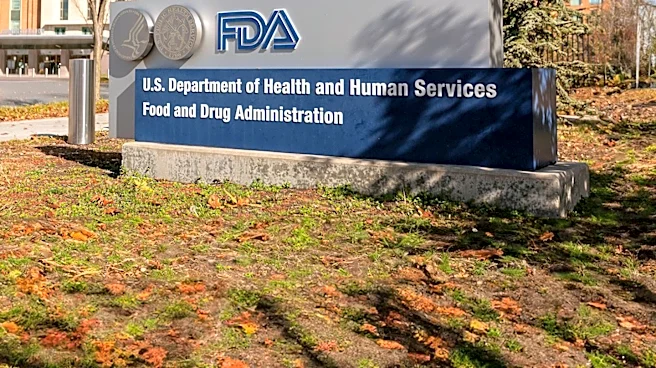
The U.S. Food and Drug Administration (FDA) has granted De Novo authorization to Theraclion for its Sonovein device. This device is designed to treat superficial venous reflux in great saphenous veins (GSV), which is the primary cause of varicose veins.
This marks the first time a noninvasive focused ultrasound platform has been authorized for this condition. The FDA's decision was based on the results of the pivotal VEINRESET clinical trial, which enrolled 70 participants across four sites in the U.S. and Europe. The trial successfully met its primary endpoint, demonstrating a 96.8% GSV occlusion rate after one year. Importantly, the study reported no serious or unanticipated adverse events, with only one mild adverse event observed. Theraclion is now preparing to launch a U.S. subsidiary, Sonovein, Inc., and has already established a dedicated Category III CPT code, a crucial step towards securing insurance coverage for the treatment.
Why It's Important?
This FDA authorization is a significant development for the estimated one-third of adults affected by varicose veins in the U.S. The Sonovein device offers a completely noninvasive treatment option, eliminating the need for incisions or catheters, which are typically associated with existing procedures. This could lead to reduced patient discomfort, faster recovery times, and potentially lower risks compared to more invasive methods. For Theraclion, this authorization opens up a substantial new market in the U.S., a key region for medical device innovation and adoption. The establishment of a dedicated CPT code is vital for market penetration, as it facilitates reimbursement from insurance providers, making the treatment more accessible to patients. The success of the VEINRESET trial, with its high occlusion rate and favorable safety profile, provides strong evidence for the device's effectiveness and safety, potentially setting a new standard for varicose vein treatment.
What's Next?
Following the FDA authorization, Theraclion plans to establish reference treatment centers across the U.S. and will focus on comprehensive physician training, clinical onboarding, and providing technical and service support for the Sonovein device. The company's immediate next steps involve the full operational launch of its U.S. subsidiary, Sonovein, Inc., to manage the commercialization and distribution efforts. The existence of a dedicated Category III CPT code suggests that efforts to secure broader insurance coverage will be a priority, which is essential for widespread adoption. As the device becomes more available, it will be crucial to monitor real-world outcomes and patient experiences to further solidify its position in the market and potentially expand its indications in the future.
Beyond the Headlines
The introduction of a noninvasive focused ultrasound treatment for varicose veins represents a broader trend in medicine towards less invasive procedures that improve patient quality of life and reduce healthcare burdens. This technology could pave the way for similar noninvasive applications in other vascular conditions. From a regulatory perspective, the De Novo authorization pathway used by the FDA for novel low-to-moderate risk devices demonstrates the agency's commitment to fostering innovation while ensuring patient safety. The success of this device could encourage further investment in focused ultrasound technology for a wider range of medical conditions. Furthermore, the emphasis on physician training and support highlights the importance of proper implementation and education for new medical technologies to ensure optimal patient outcomes and widespread acceptance within the medical community.